Poland
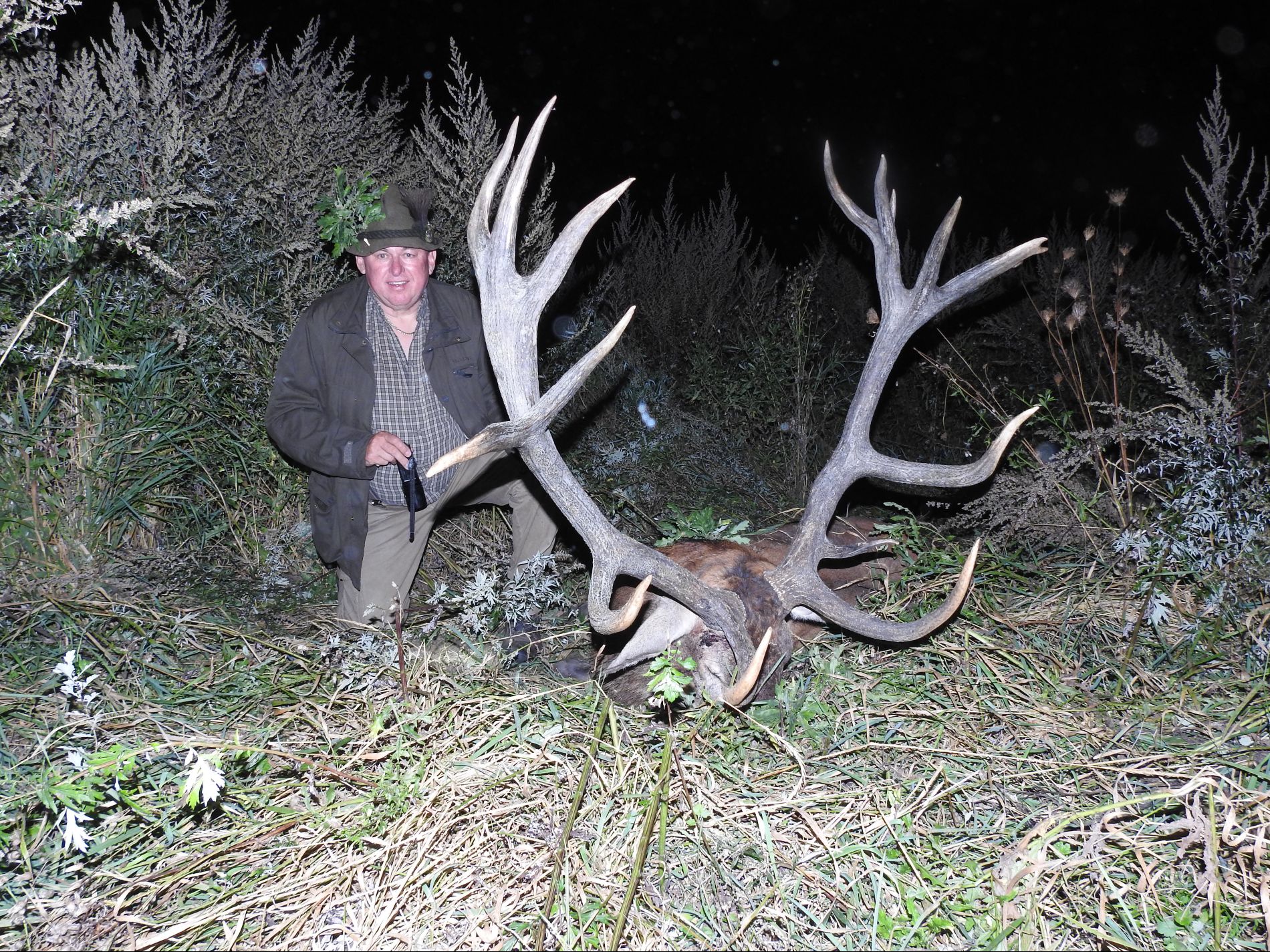
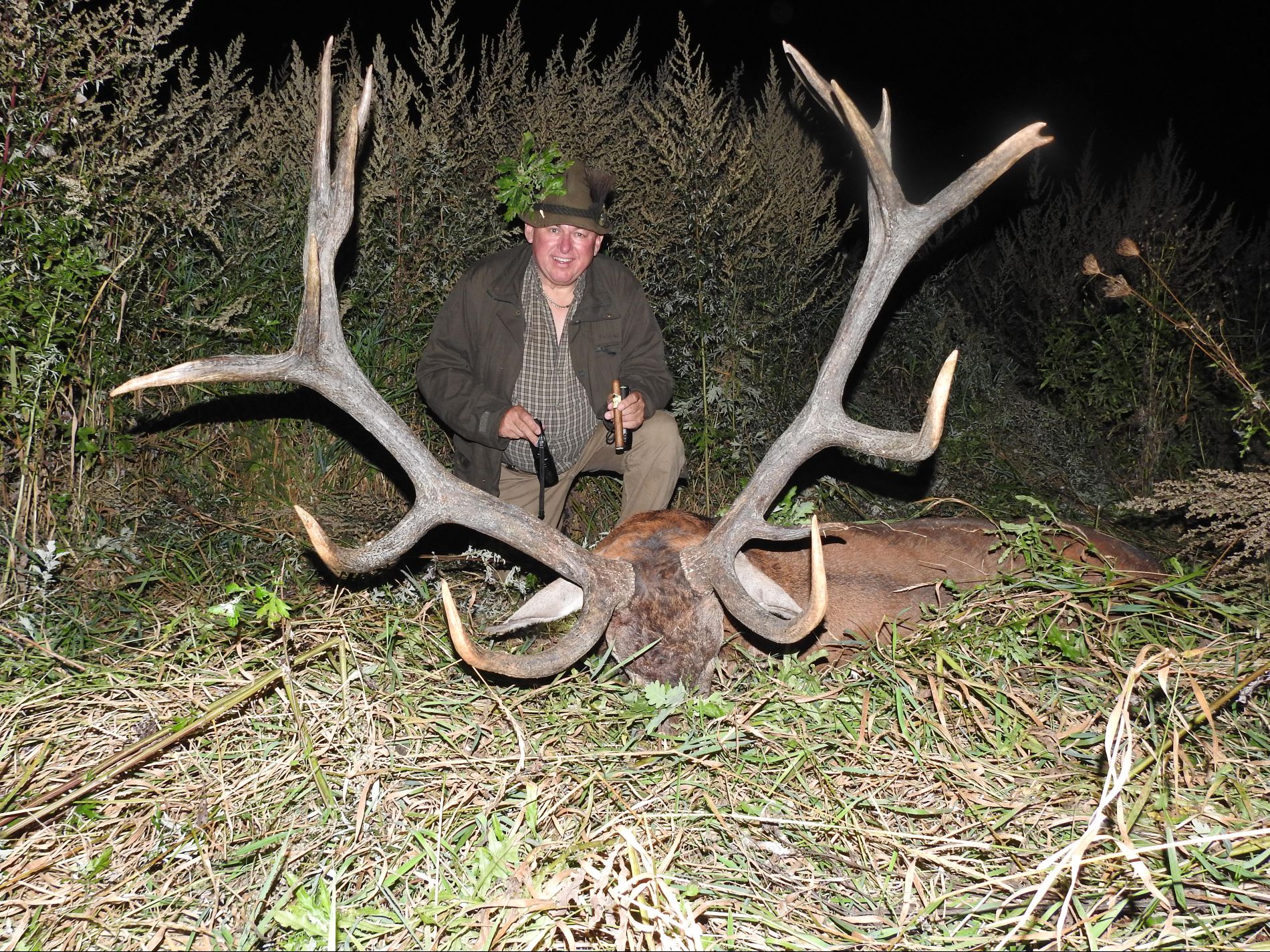
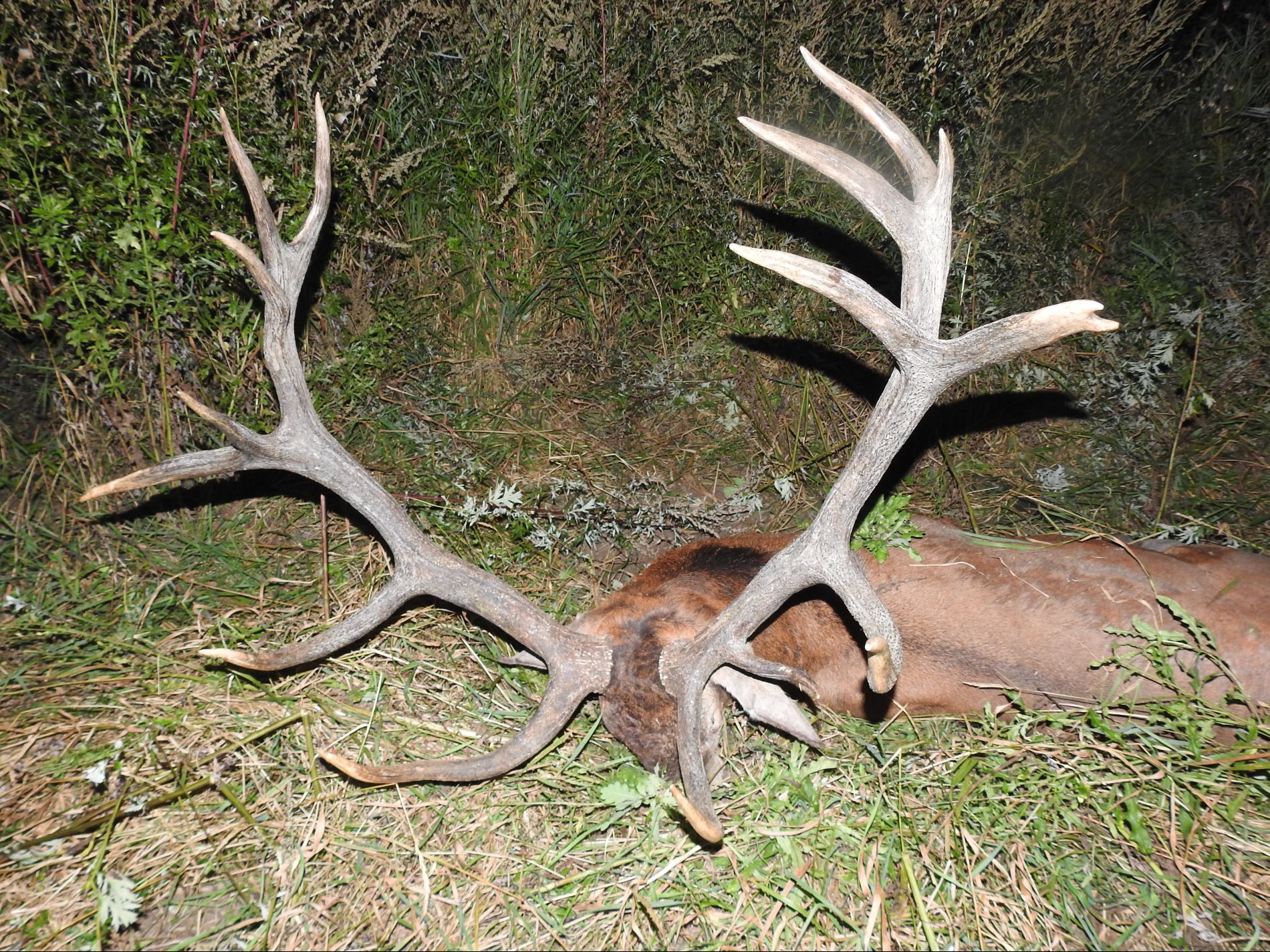
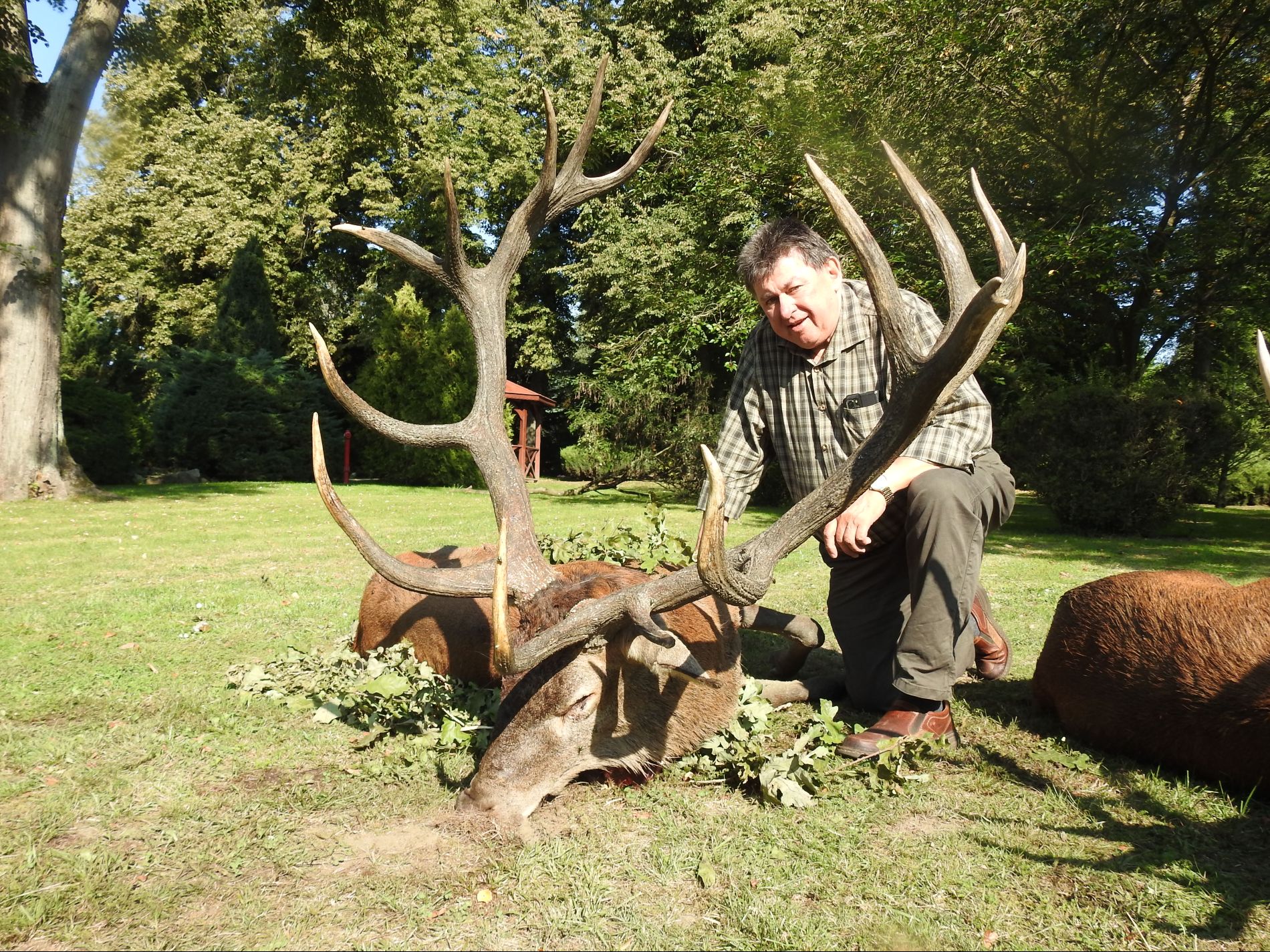
In Poland you can be sure of a terrific hunting experience
Highlights
- Hunting in State-owned Hunting Areas
- Professional Hunting Organization
- Well-tested Products
- Amazing Trophies
- Coveted European Game Species
- Strong Hunting Traditions
Our Favourite Hunting Destination
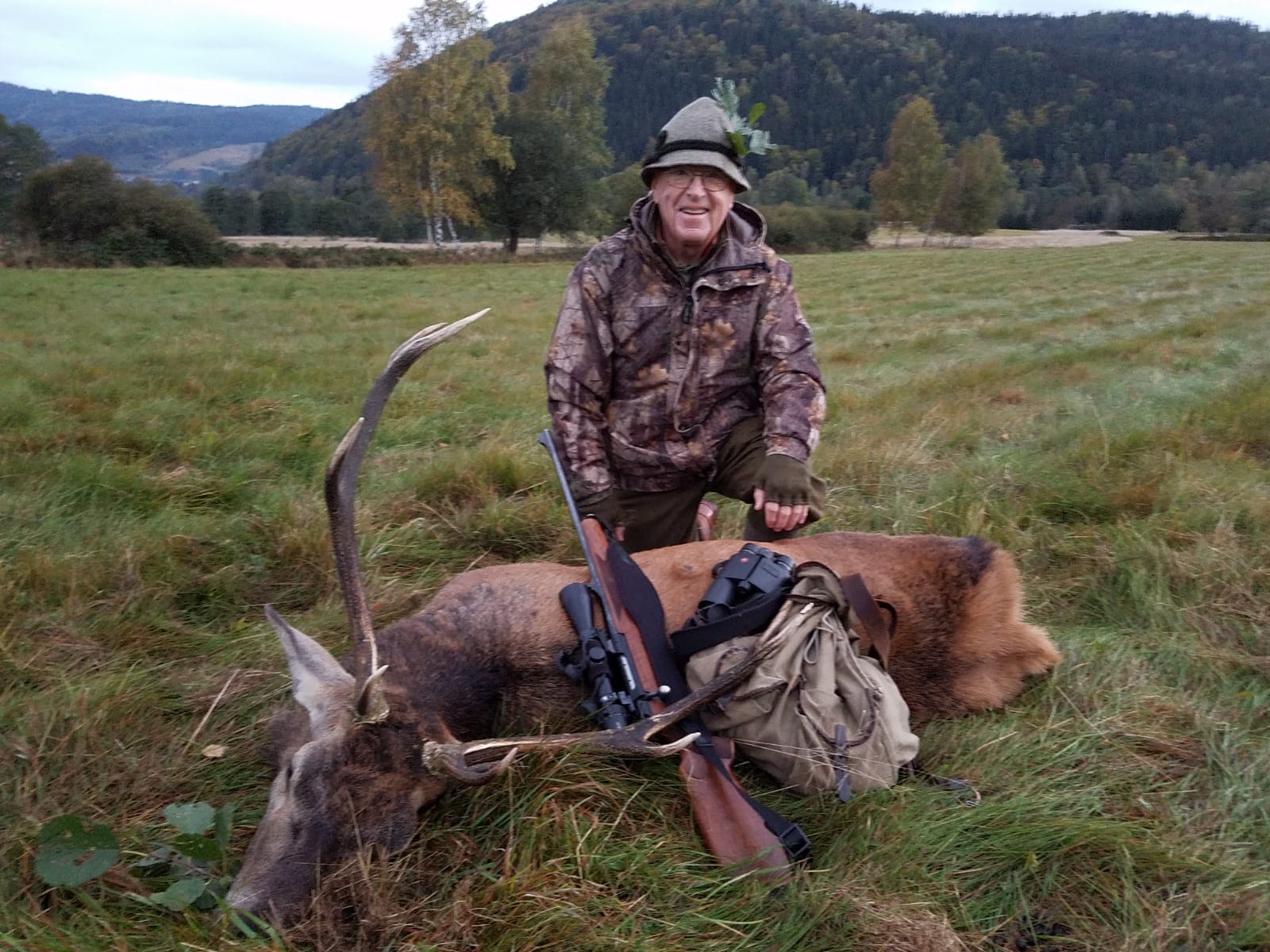
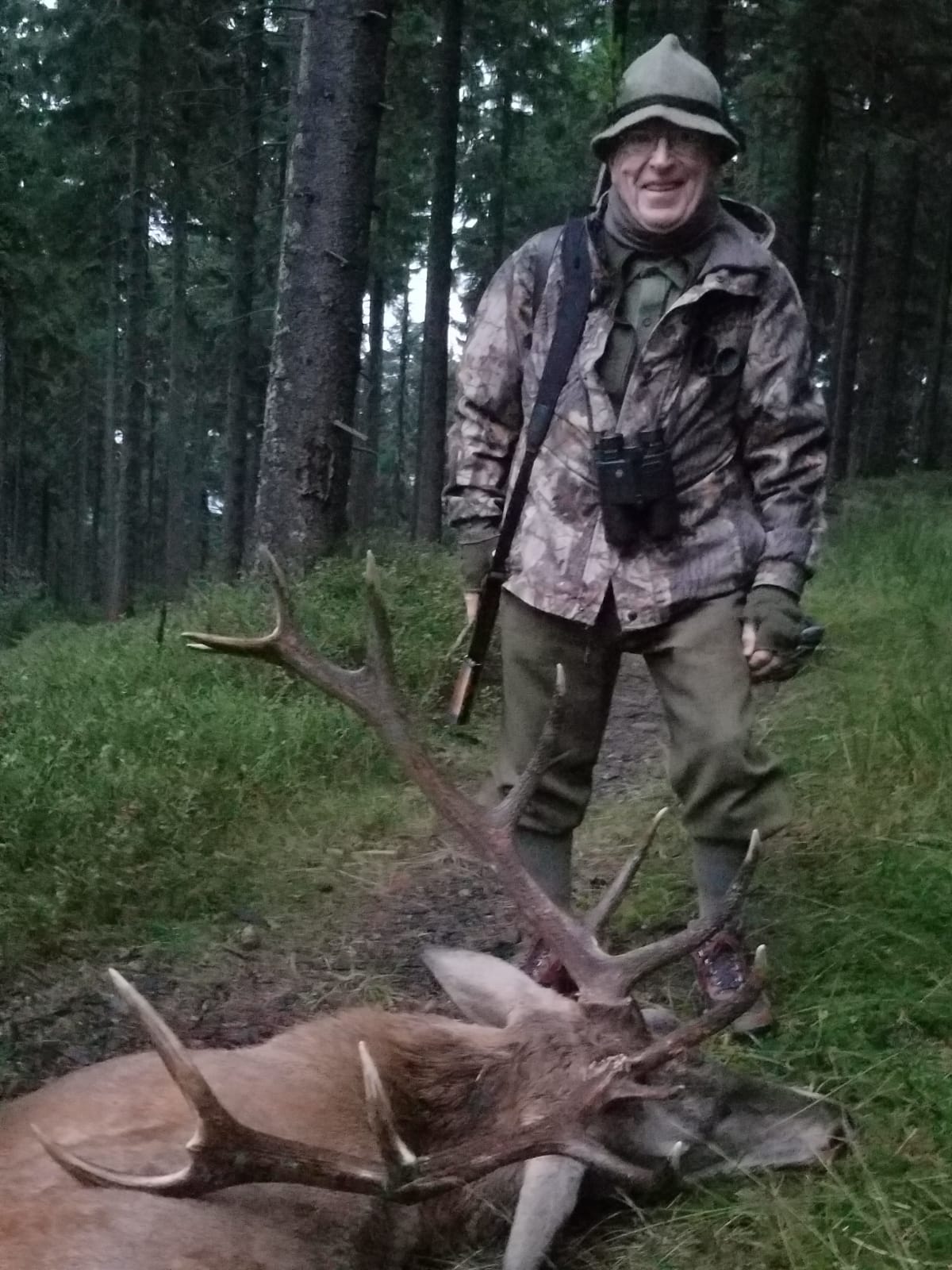
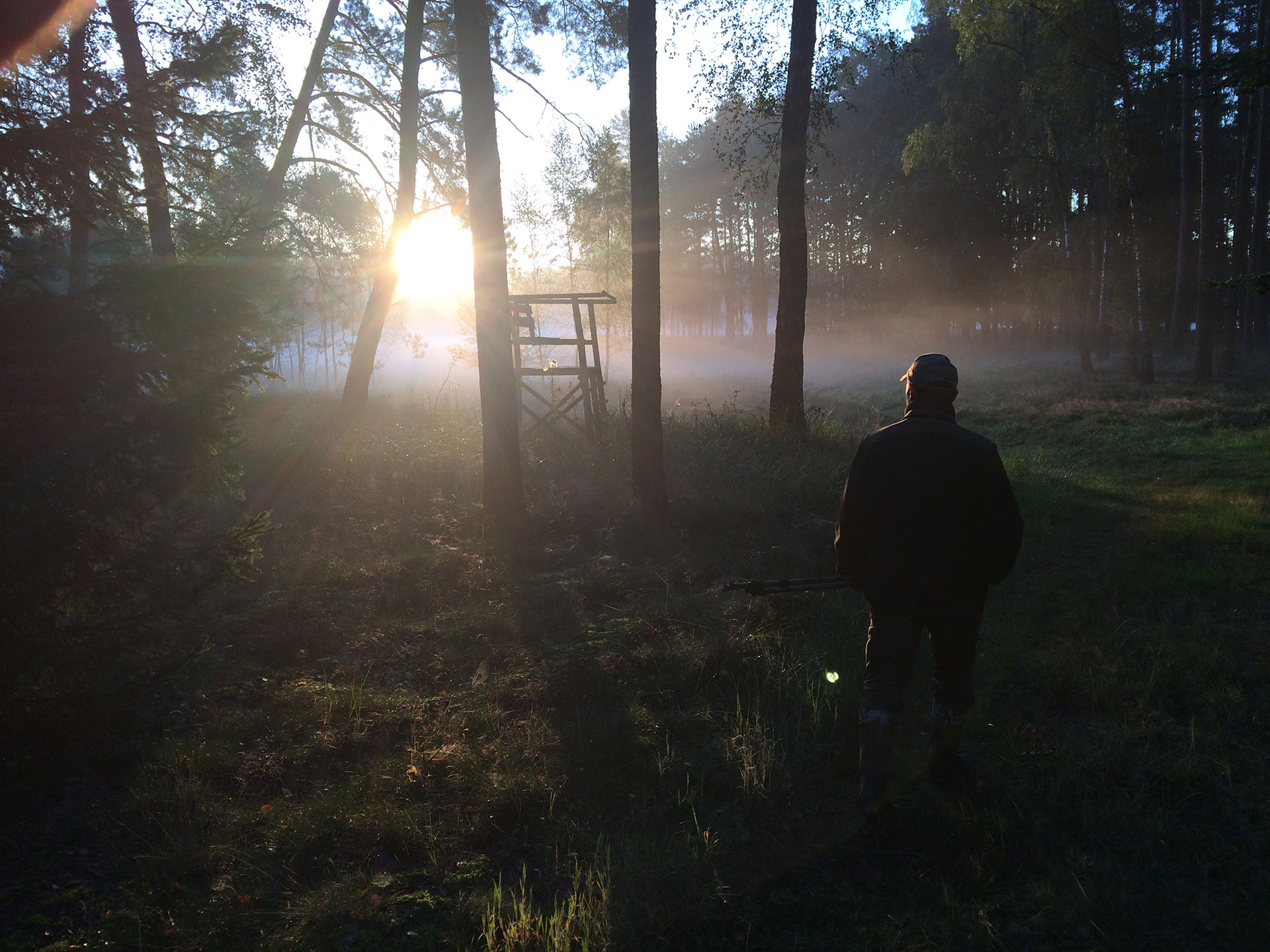
Poland is, with its size and varied nature, a real hunting paradise and for many hunters it is Europe’s premier hunting destination. Poland has more regulars amongst our customers than any other European destination, and many return here year after year. Everybody can hunt here – from the inexperienced first time hunter to old hands with many years of experience. In Poland you can find all our favourite game species, and population densities of game are very high. Trophy quality is improving year after year, thanks to professional game management and a very well organised hunting regime. Poland is also characterised by an exceptional degree of hospitality, and over the years many friendships have arisen between visiting foreign and Polish hunters.
About Poland
Poland shares a border with 7 different countries: Germany, The Czech Republic, Slovakia, The Ukraine, Lithuania, Belarus and Russia (Kaliningrad). Moreover, Poland has a long northern border with the Baltic Sea. Poland, at 312.685 km2 in size, is the 9th largest country in Europe with around 38.5 million inhabitants, of which 90% are catholics.Through the northern part of the country flow the rivers Wisła, Wartha and Odra. Large areas are covered in forest. the central part of Poland is predominantly flat, fertile and has a large agricultural production. The southern part of the country is more mountainous but less fertile. Poland is a country undergoing rapid development, and has much to offer. Here you can find everything from medieval architecture, castles from the age of knights and chivalry, large modern cities to rural areas where the preferred mode of transport is a horse and cart.
Hunting in Poland
Diana Hunting Tours offer a wide range of the very best State Forest Districts, with whom we have been working with for decades. We know that everything is well organised, the hunting personnel well trained, experienced and responsible , and our long term agreements with these districts are our customers guarantee that they will receive a high quality product. In Poland hunting is only carried out of nature’s own terms. Hunting always takes place in the open countryside - hunting in fenced enclosures is prohibited by law. The same is true for the “cultivation” of large trophies using artificial means.
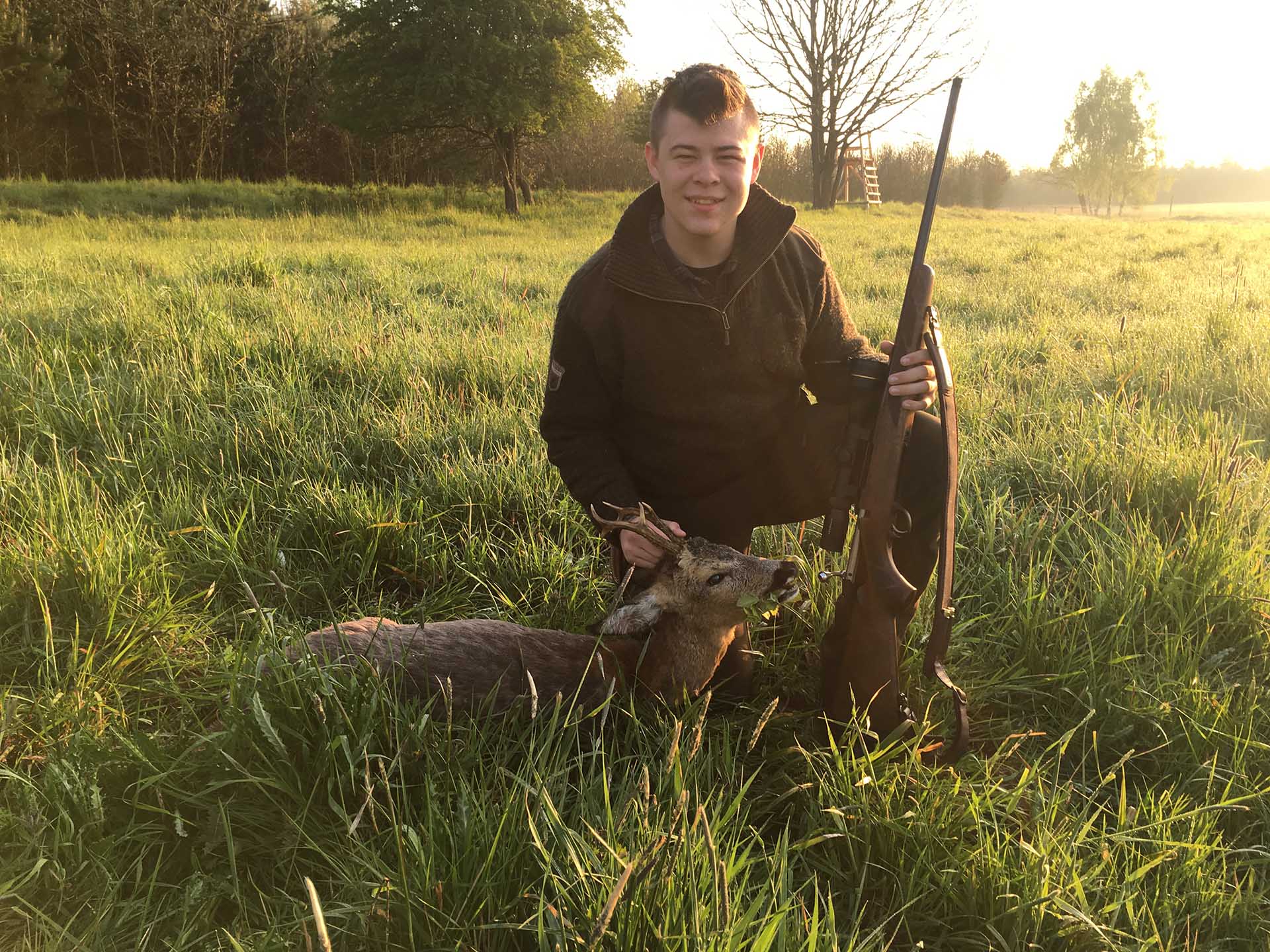
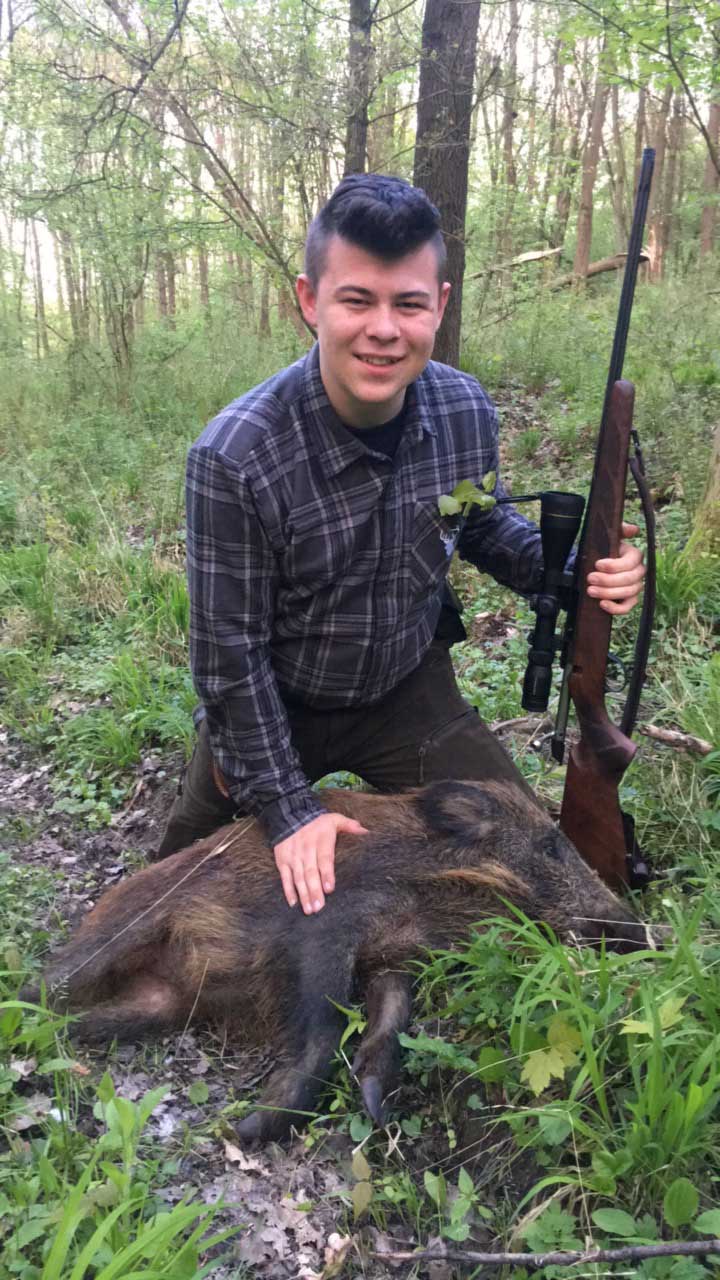
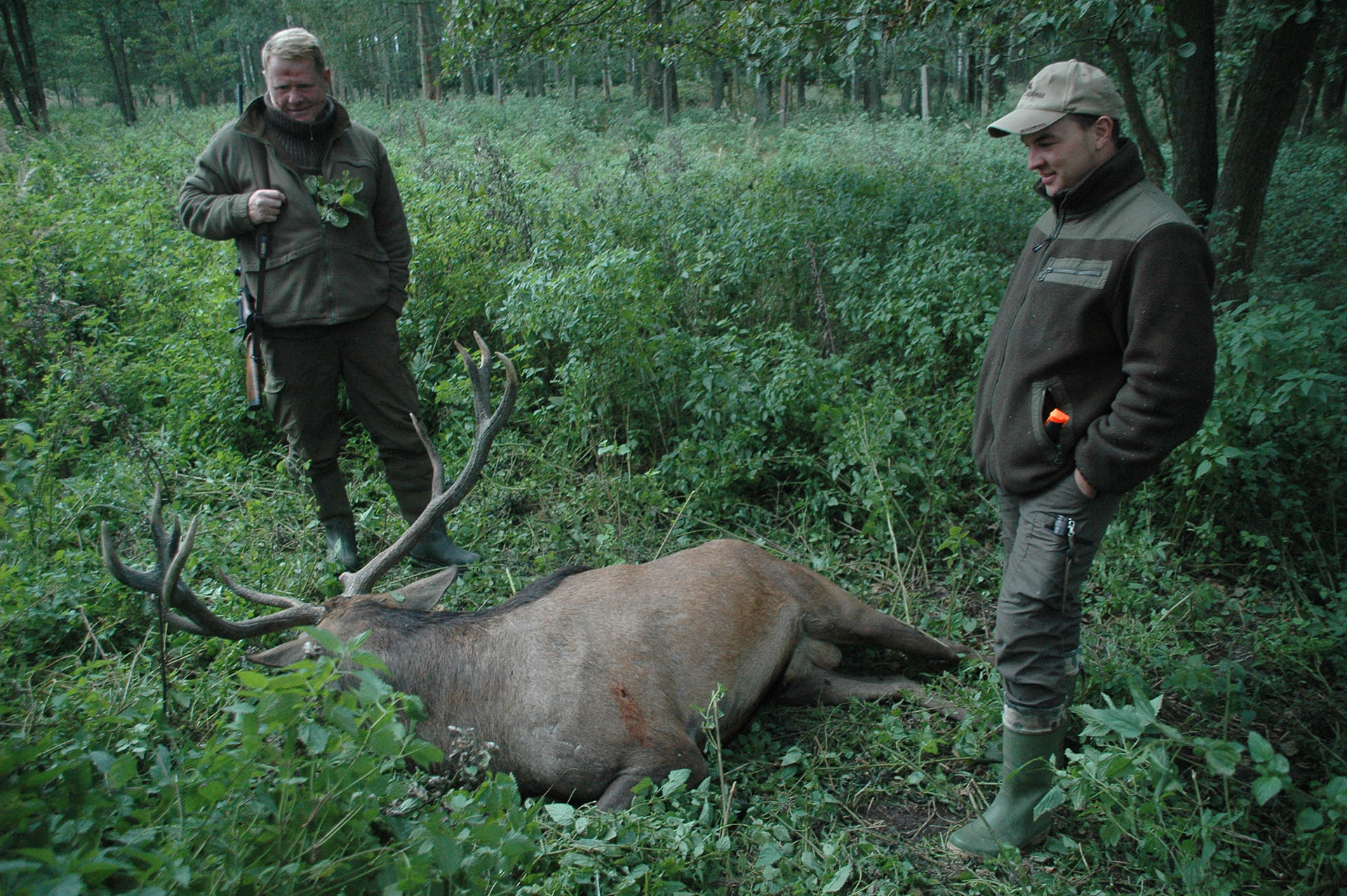
Polish hunting districts are large – roughly speaking from 3,000 to 30,000 hectares. The most popular game species are roe deer, red deer and wild boar, but Poland is also home to good population of fallow deer, mouflon, fox, racoon dog, ducks and geese - in a few individual districts you can even find European bison (wisent). All hunting in Poland is carried out with your own individual hunting guide, who knows his district inside out. It is this hunting guide who will point out the game you are permitted to shoot. On individual hunts you will typically go out hunting twice during the day, from early in the morning before sunrise and again in the late afternoon/evening around the hours of sunset. On driven hunts hunting takes place all day - but for safety reasons only when the light is good.
Accommodation in Poland
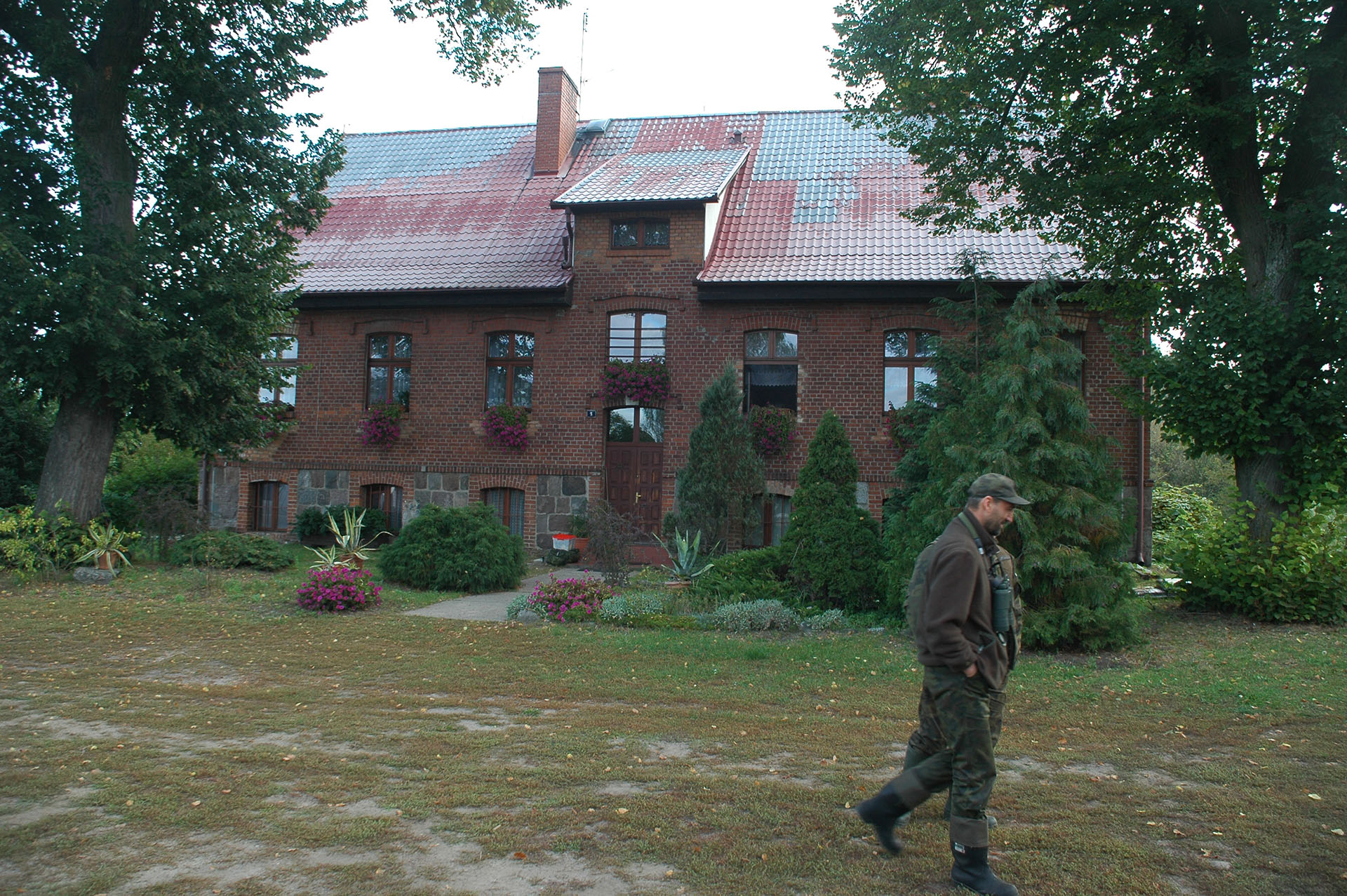
Our hunters normally stay with the head gamekeeper and his family in the hunting district itself. The standard of accommodation has developed rapidly in recent decades, and in by far the most districts, can be described as good. Meals are generous in size and of a very good standard, prepared with good local ingredients, and often featuring game. Only water, coffee and tea are usually served with meals, so if you prefer to drink soft drinks, beer, wine or spirits, you will need to bring your own beverages.
Polish Culture
In Poland it can be a great idea to combine hunting with a family holiday - especially if your family enjoys outdoor activities. You can also choose to hunt in a district close to one of the larger cities, which will give a great opportunity of experiencing Polish culture. It is also still very cheap to go shopping in Poland. Some districts offer you the chance to go fishing, or to take a ride in a horse drawn cart, but it is always a good idea to let the district know about your wishes in good time before your arrival.
Quite simply Poland can offer everything, you simply need to pack your suitcase and rifle, and off you go. Some great adventures await you in this wonderful hunting destination!
Video Gallery
-
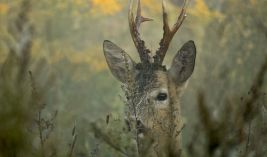
 Hunting in Polen
 -
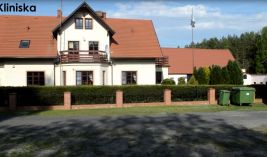
Accommodation Kliniska
-
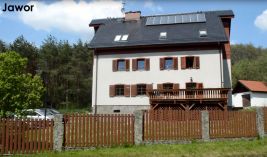
Accommodation Jawor
-
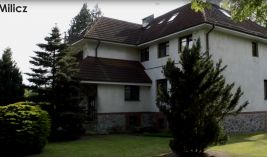
Accommodation Milicz
-
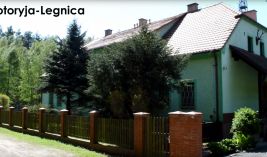
Accommodation Zlotoryja/Legnica
-
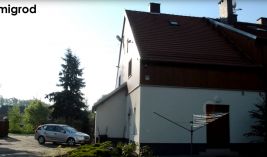
Accommodation Zmigrod
-
Bock Hunting in Zamrzenica
-
Red Stag Hunt in Ladek Zdroj
-
Driven Hunt at Lutowko
-
World Hunter episode 6 - Hunting roebuck at Brodnica in Poland during the rut (Deer hunting)
-
World Hunter episode 7 - Hunting roebuck at Lutowko in Poland during the rut (Deer hunting)
-
Ladek Zdroj
-
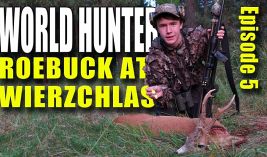
World Hunter episode 5 - Hunting roebuck at Wierzchlas in Poland during the rut (Calling roebuck)
Hunting stories
James Males on red stag hunt in Ladek Zdroj
Dear Sacha and dear Ulla,
The trip arranged by DIANA was, in a word, perfect.
First, my thanks to you two for patiently helping me along the way - Polish rifle permit, transport and general tips.
Secondly, the Polish staff associated with the hunting were excellent, and I would say, we all had a good sense of humor.
Adam: he was waiting for me at the arrival airport, but he had to go to the WC just as I arrived, and his
mobile phone was off or on silent - so he did not hear when it rang. But with the help of a fellow in the
Information booth we did get together.
Marta. I would say she was the brains of the whole enterprise. She ran the hotel, translated and
had all sorts of important contacts, including the Director of the Breslau Airport ( who had hunted there).
He had prepared the Lufthansa staff at the airport for me with rifle and two stag heads.
Sylvester, the guide. I have seldom met a more competent and pleasant hunter. Very tall, handsome and athletic. He gladly reduced his stride and pace so that I could keep up with him up and down the steep mountainside, and he knew every nook of the large district. I met his lovely family at his invitation. His 4X4 was clean and neat ( as he was), and he was punctual.
Matagosia. She is an employee from Adam's office and took me back to Breslau via Grottkau. Very intelligent and modern in her worldview and yet determined to become a hunter herself. On the morning
she took me to the airport we had to be careful with the time because that same morning she had to take
the Hunter's Examination. Everything worked out for her ( 99/100 correct answers) and for me, too. One more plus, through M's partner, Hubert, I learned Zwibgnew from Kliniska, is still alive and I hope to get Z's e-mail address later.
District Only problem was the monoculture forest. Game plentiful enough, and the hunting was difficult enough to let the hunter be happy ( if not proud ) of any success. The staff at retrieved the game and prepared the trophies for transport were efficient and very organized. They had done it all many times before.
I am looking forward to the next adventure with your company, to France Oct 2019 - so god will.
Many thanks!
Jim
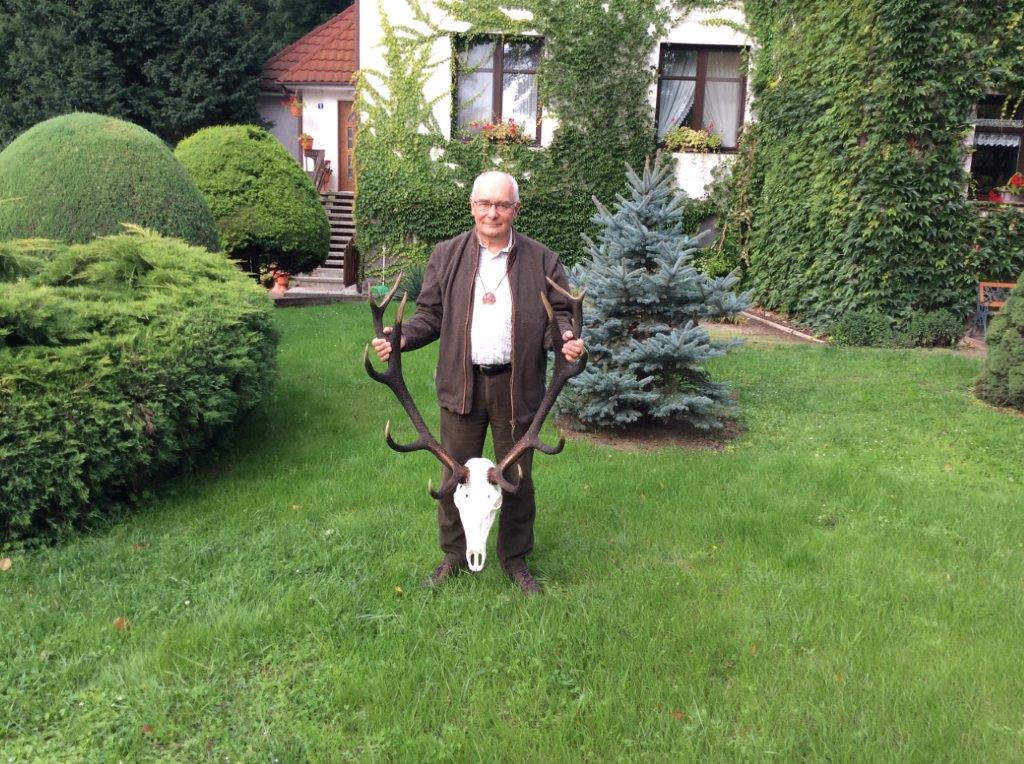
Kæmpe jubilæumshjort !
Jubilæumshjorten
Igennem rigtig mange år har jeg besøgt reviret MILICZ 67 – Kubryk i Polen, og jeg tænker ofte tilbage på mange og spændende jagtoplevelser – sammen med Jurek, Jozef, Wojtek, Maciej og Karo. Jeg har altid nydt min jagtferie her og har knyttet mange venskaber med andre jægere. Opholdet i jagthuset – med fremragende forplejning og venlige medarbejdere – har altid ført mig tilbage til dette fantastiske jagtrevir, hvor lange pürsch og mange ophold i hochsitz – med og uden jagtheld - har givet mig et jagtligt fædreland nr. 2. Jagten på skovens konge – kronhjorten – trækker mig magisk til Kubryk, igen og igen. Jeg har nedlagt meget kronvildt på reviret – små hjorte, bedre hjorte samt meget stærke hjorte, og jeg sender min store tak til DIANA Jagtrejser og til alle dem, jeg har måttet jage med gennem alle årene.
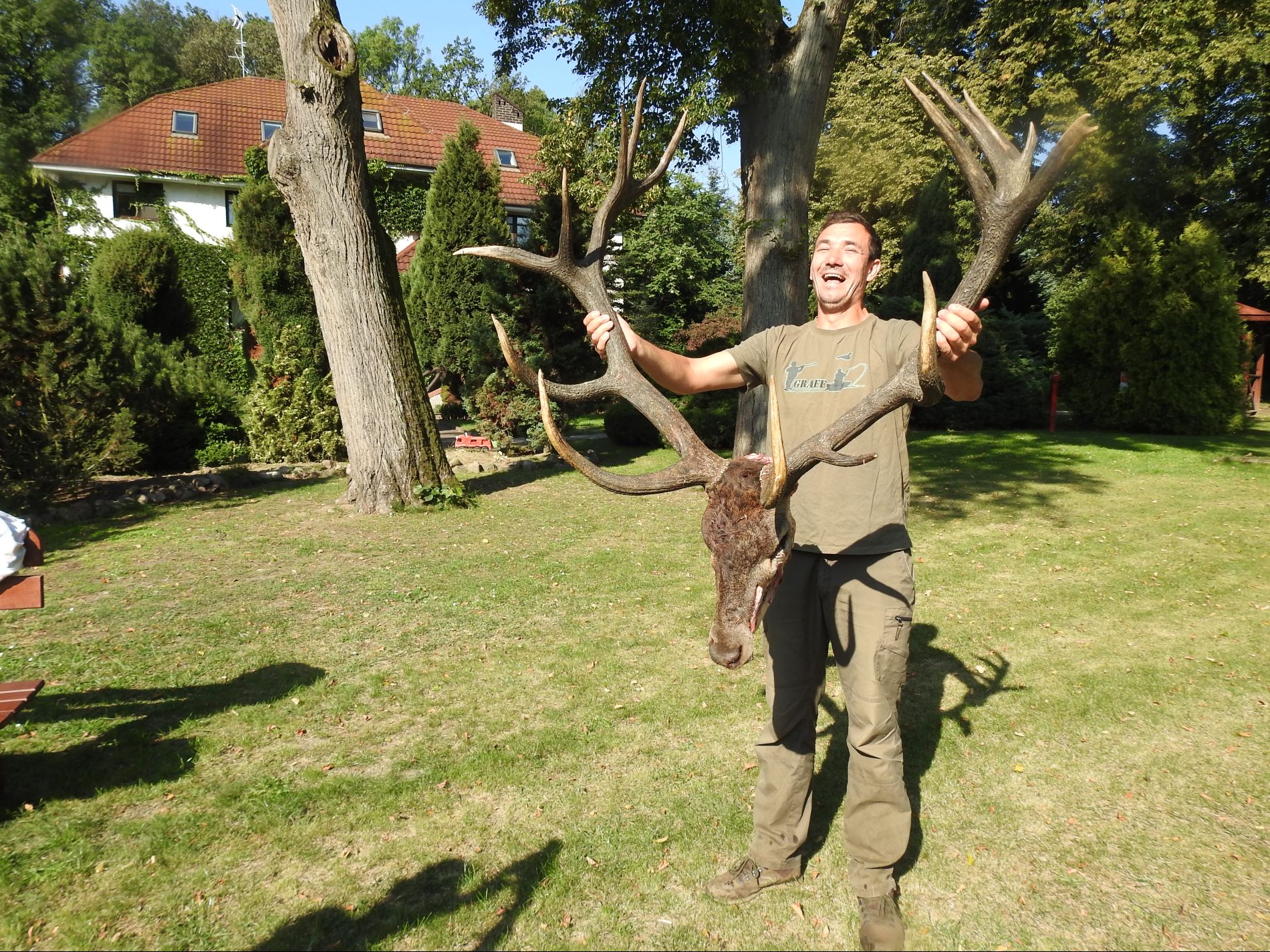
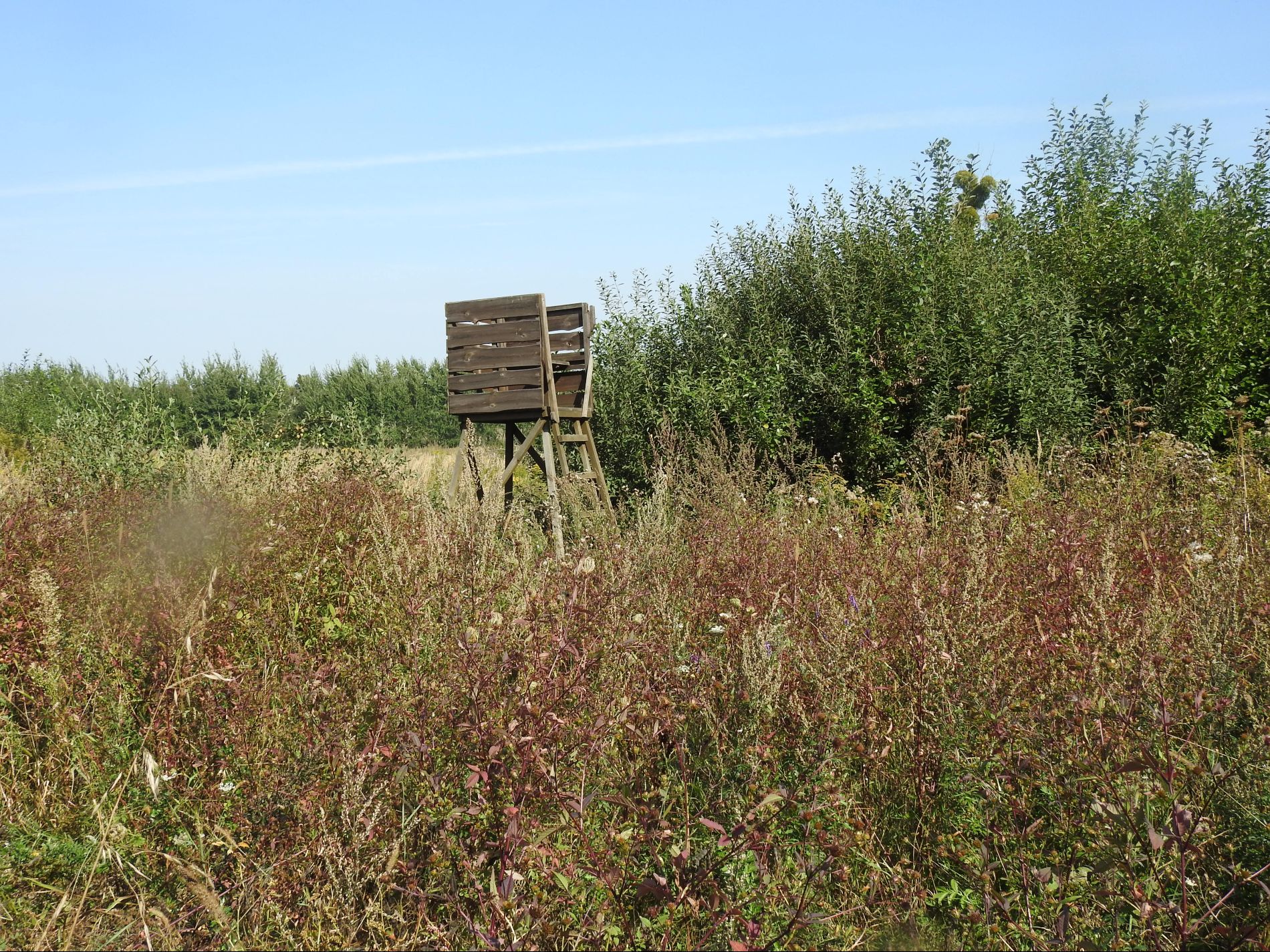
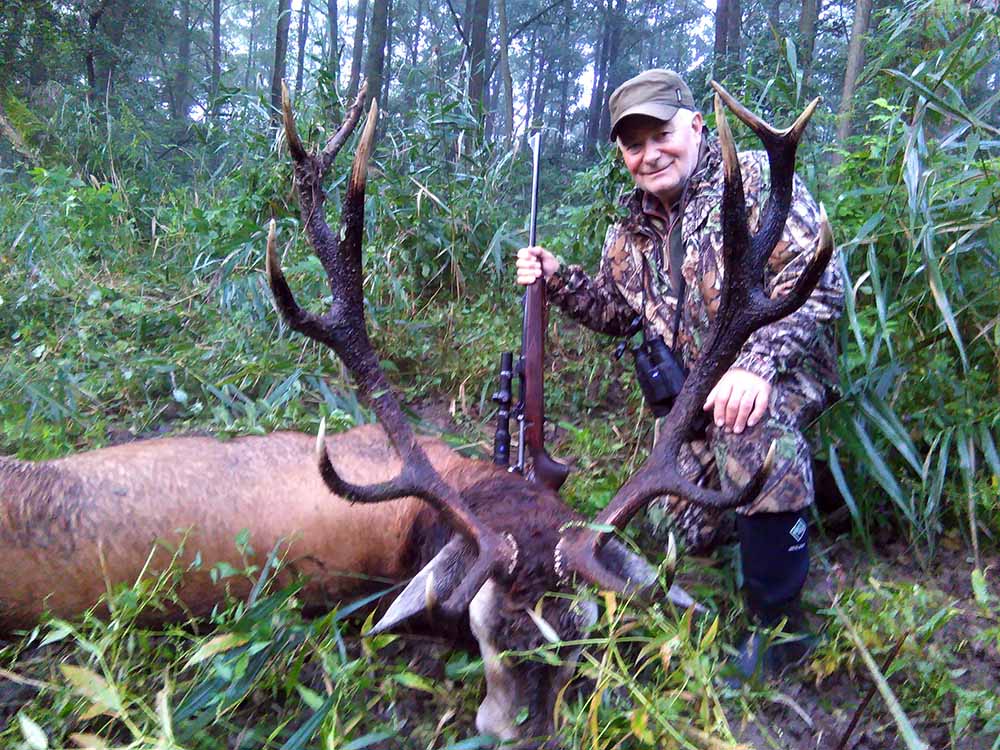
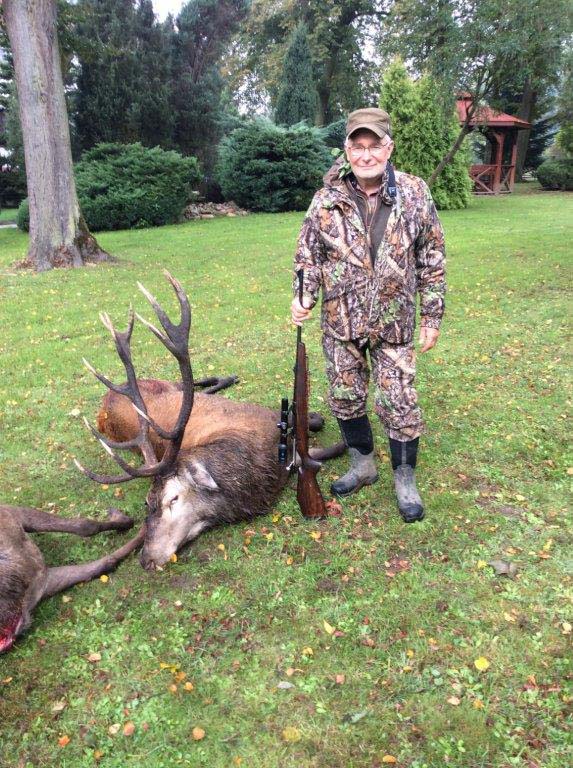
Den 13. september 2020 startede jeg bilen for igen at køre til Milicz. Efter ankomsten til jagthuset hilste jeg på jagtførster Maciej samt nogle jagtvenner fra Münsterland, som jeg har truffet på Milicz tidligere. De havde allerede nedlagt hjort. Der blev hurtigt pakket ud, idet Maciej havde travlt og pressede på for at komme afsted på jagt. Vi kørte ud på en del af reviret, som jeg kendte fra tidligere år, men hvor jeg ikke havde jaget før. Vi tog plads i et lille drivjagtstårn, hvor der kun lige var plads til os begge. Vi er slet ikke for tidligt på plads, for efter ganske kort tid gør Maciej tegn til mig – det er bevægelse i buskadset. Vi kan kun se enderne på geviret, da hjorten kommer gennem terrænet, men pludselig kommer han ud på engen ca. 350 meter væk og står helt frit og brøler. Vi har nu mulighed for at bedømme hjorten – det er en stærk og moden hjort med et stort udlæg. Den prøver at holde sammen på sin rudel og render frem og tilbage, men den kommer ikke tættere på. Så pludselig går alt meget hurtigt – hjorten og hinderne trækker ind i det tætte 2 meter høje buskads og er hele tiden i bevægelse. Hjorten driver hinderne tættere og tættere sammen. Vi kan nu se de øverste ender af geviret. Jeg er klar med riflen og venter på, at hjorten skal komme fri. Den brøler stadig og skifter plads, mens den driver hinderne frem og tilbage. Pludselig – på 175 meter – står han halvvejs fri, og jeg kan lade skuddet gå. Hjorten tegner godt og forsvinder efter 50 meter ind i buskadset. Vores lille tårn vakler en del, også Maciej var blevet ramt af jagtfeberen. Efter en kort og anspændt ventetid forlader vi tårnet for at lede efter hjorten. Det er svært i den tætte bevoksning, men der ligger han! Så står vi der foran den nedlagte kronhjort – en hjort med et udlæg og størrelse som på en wapiti. Vi er overvældede over størrelsen på geviret på den gamle, stærke og modne kronhjort. Vi har nu brug for lidt ro. Jeg tænder en cigaret, mens Maciej henter hjælp til at få bjerget hjorten. Ladt alene tilbage med kronhjorten bliver det langsomt mørkt – det er en herlig aften, vildsvinene trækker forbi mig i vildnisset, og ænderne flyver tilbage til søerne. Efter 1,5 timer kommer Maciej tilbage med Wojtek og Karo – begge betragter hjorten og er begejstrede. Jeg er sikker på, at alle er enige om, at der ligger en særlig stærk brunsthjort. Det er allerede mørkt, men hjorten skal brækkes, bjerges og køres tilbage til jagthuset. Her venter man allerede på os med et stort knæk og bræk, parade, snak og fest. Det bliver en lang aften.
Jeg har nu tid og bruger de næste dage på at jage med kameraet. Også jægerne fra Münsterland fik nedlagt hjorte. Alle er spændte på at se, når hjortene kommer tilbage fra præparatoren. Selv en jagtferie får en ende, men inden afrejse skal hjortene vejes og bedømmes, og der skal skrives protokol.
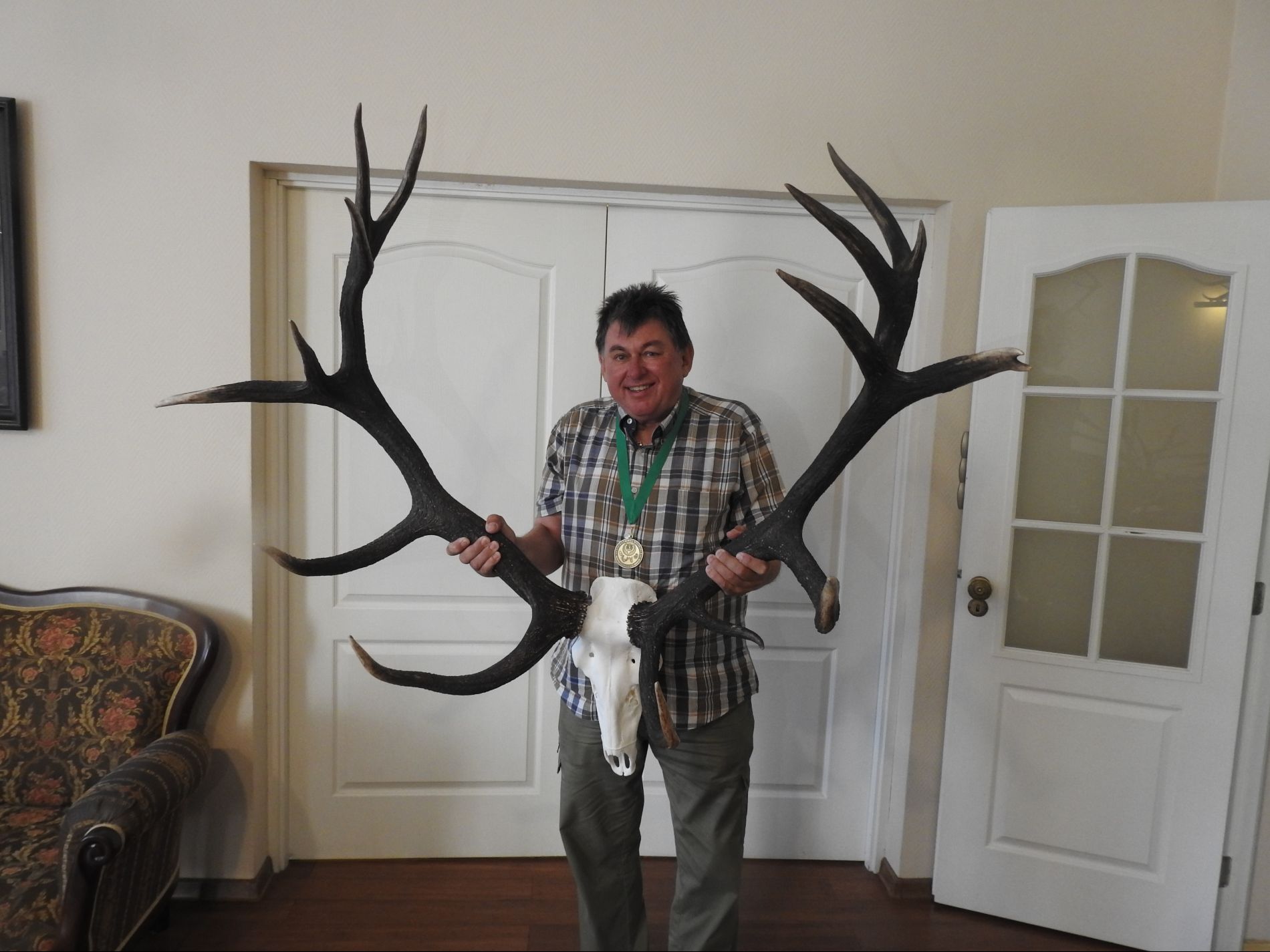
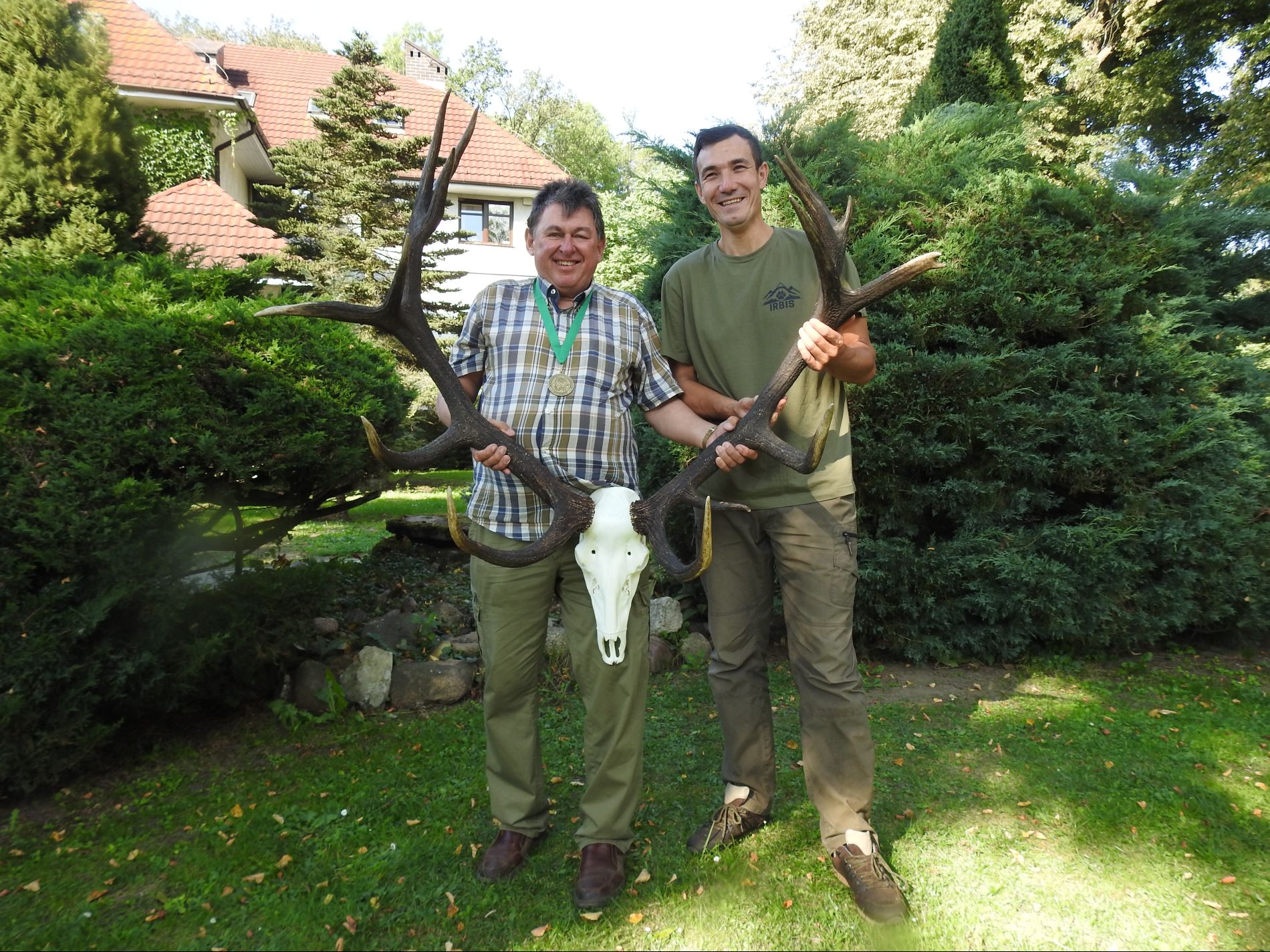
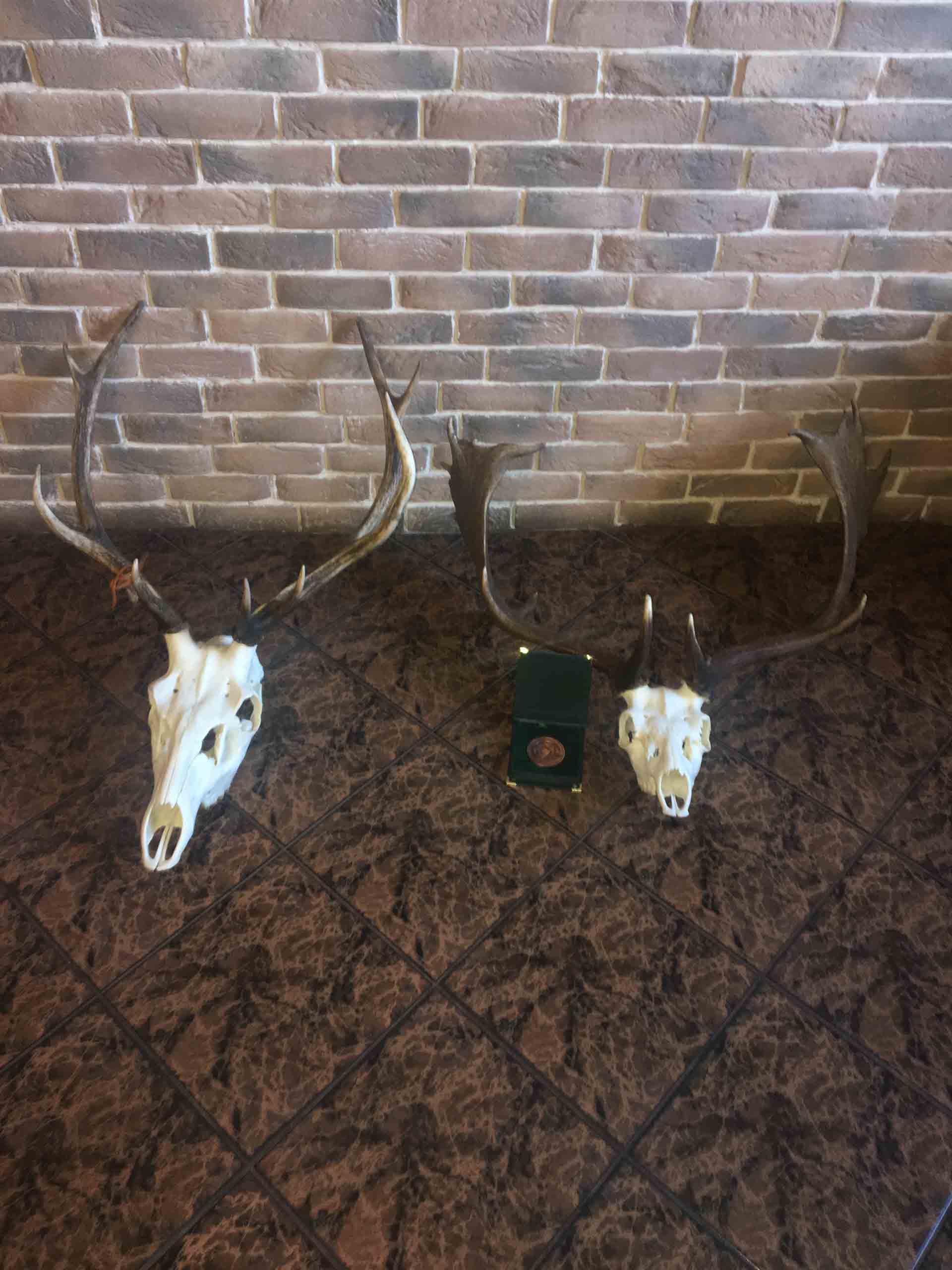
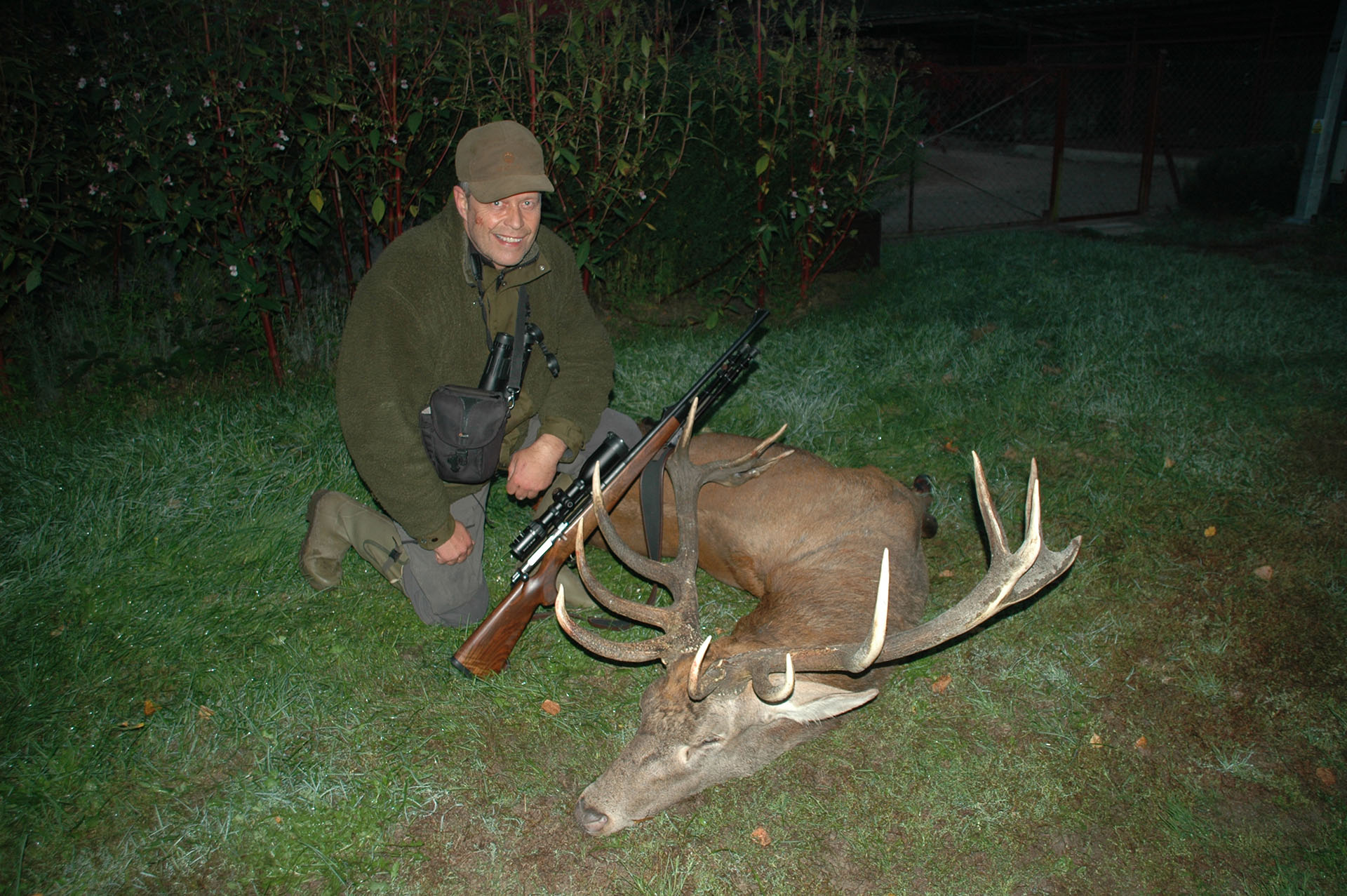
Et utroligt jagtresultat: 11 år gammel, gevirvægt 10,37 kg, stanglængde 114 cm, rosenkrans 28,1 cm = 237,62 CIC-points !!
Maciej overrækker mig en guldmedalje - vi er begge rørte og vil aldrig glemme denne fantastiske jagtoplevelse, og jeg kan rejse hjem med min jubilæumshjort for 25 års jagt i Polen på revir Milicz. Jeg takker igen jagtførster Maciej samt hans jagtførere Wojtek og Karo for en uforglemmelig jagtoplevelse og tager afsked i håbet om et snarligt på gensyn - alle ved godt helbred.
Knæk og bræk
Dieter Peschke
Jens Ulrik in Poland
Darz bór!
In the beautiful fall of Northern Europe, it is time to manage the roe deer population. In the hunting area Maniszewo alone they cull 170-200 roe does and fawns during every season. Follow Jens on a hunt for field dwelling roe deer in huge Polish fields October 2013.
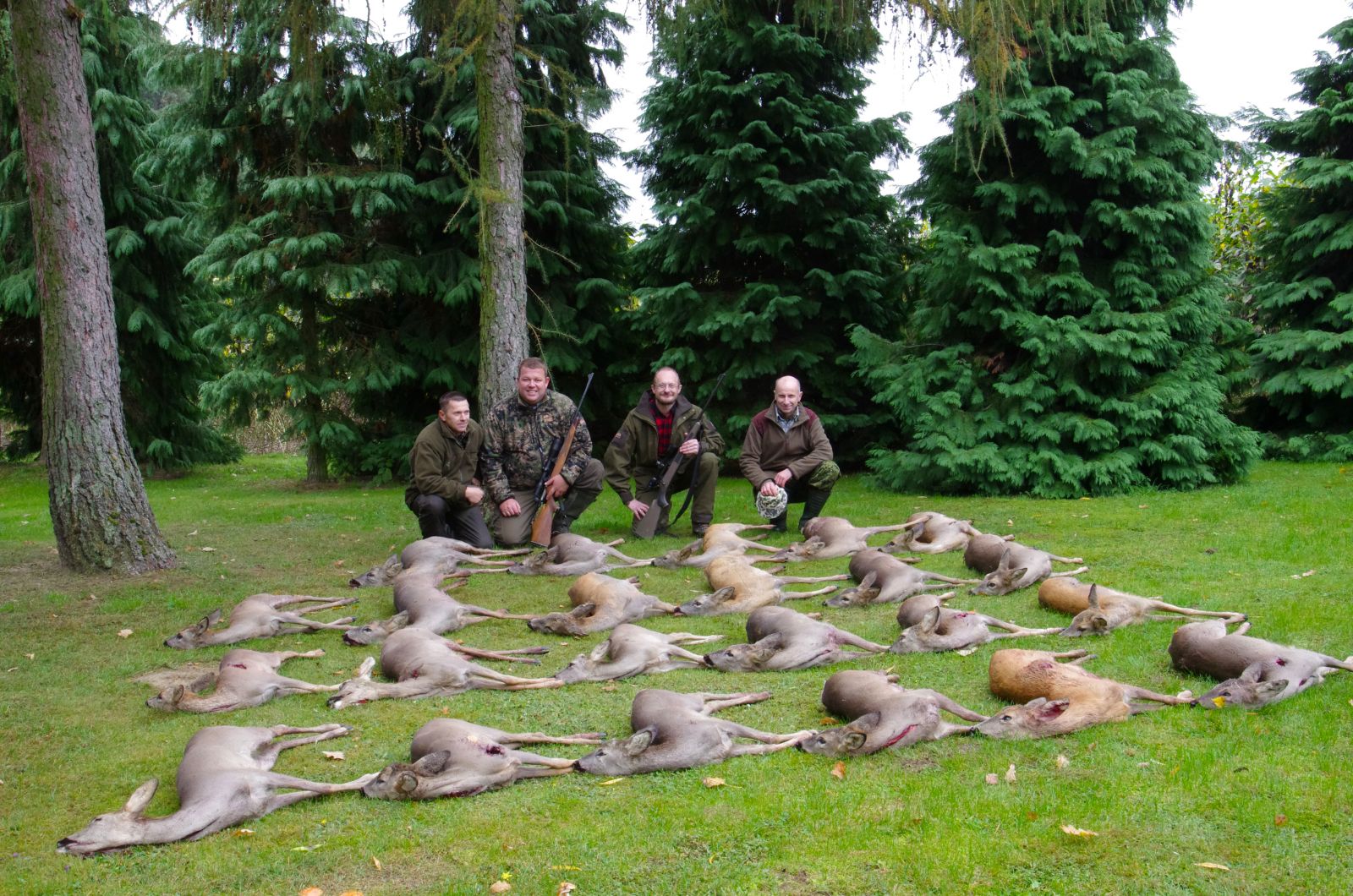
One by one, the bagged deer were weighed and tagged while their weight and gender was carefully noted. We were two hunters who had been hunting for three days and when everything was accounted for, there was 286 kg’s of fine venison in cold storage destined for dinner plates all over Europe. Between us, we had managed to bag slightly less than 15% of the annual quota of the entire area.
Are you coming?
The opportunity to go to Poland had suddenly materialized out of thin air a little more than week earlier. The hunting area Maniszewo in Northwestern Poland was looking for hunters interested in roe deer culling on very short notice. That type of hunting is always a challenge and furthermore it is very inexpensive. The fact that we were welcome to take some of the fine meat home with us just added to the attraction. Not surprisingly, my good friend Eric and I proved easy to persuade.
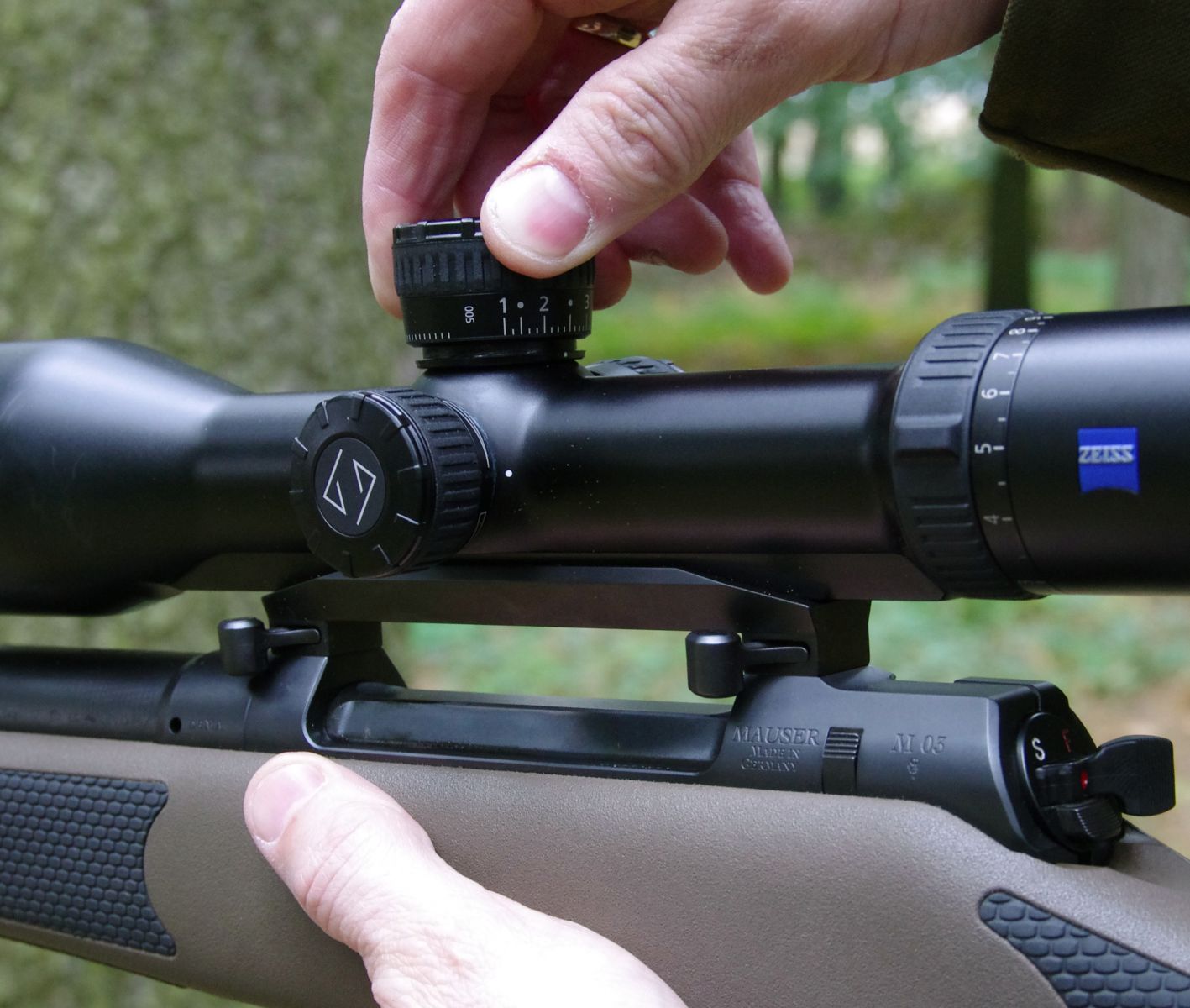
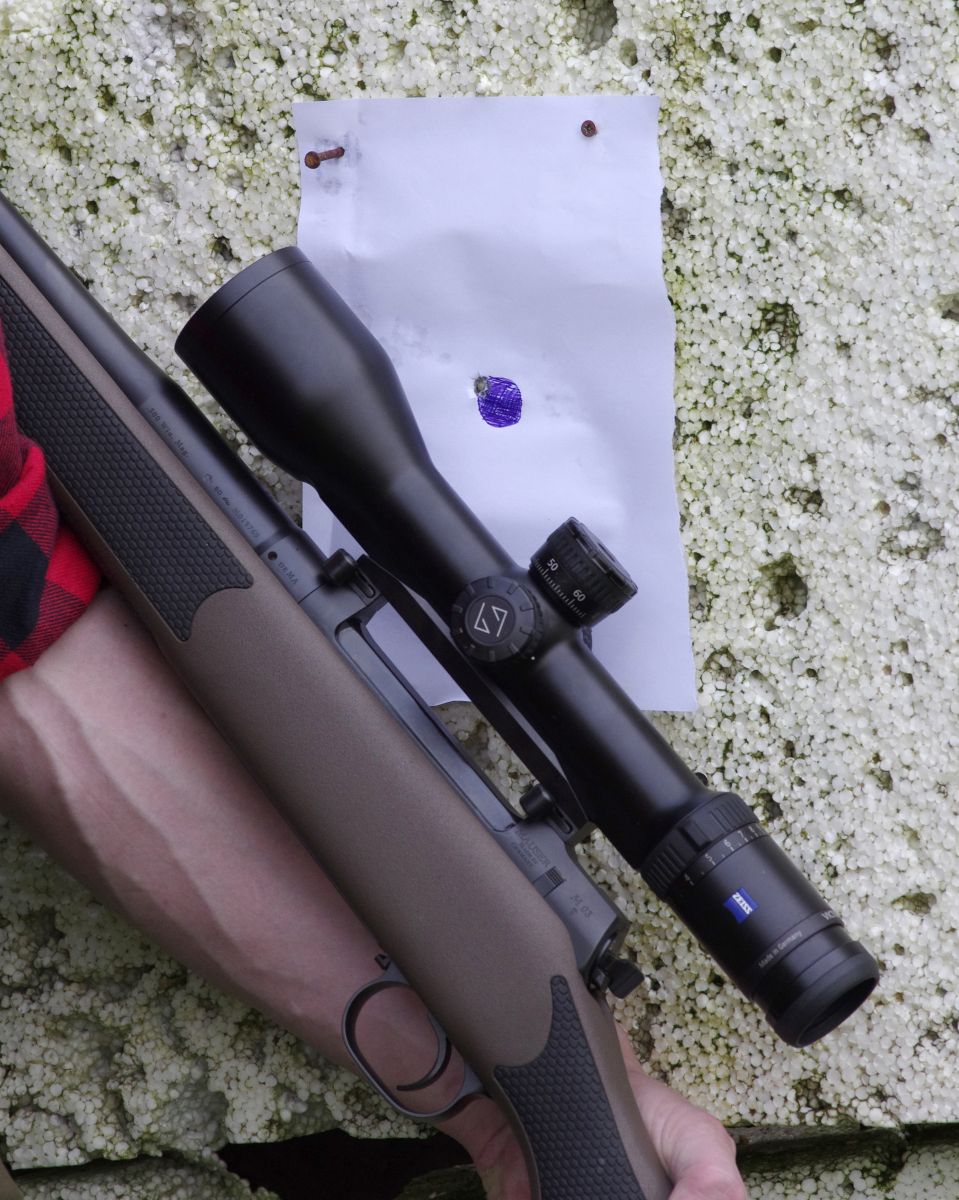
Furthermore, I was going on a big trip to Africa a few weeks later and I really wanted to try out my brand new rifle kit consisting of a Mauser M03 with a Zeiss Victory HT 2.5-10x50 on top. This was the perfect opportunity.
I picked up the rifle and scope the day before we headed for the hunt in Poland. Upon our arrival, we had a little less than an hour before we would head out on the first outing with our guides.
We were in luck! Behind the huge fenced garden of the guesthouse, there was a fine little 100 meter shooting range equipped with a homemade but very sturdy shooting bench. I quickly assembled the brand new rifle – it only took a few seconds – and I made a couple of crude paper targets with a ball pen on the back of some tax return slips from the bottom of the trunk. I knew that the gun makers at the Mauser factory had test-fired the rifle but I did not have a clue what ammunition they had used. I just hoped that the first shot with the Norma Oryx ammunition I had chosen for this hunt would land somewhere on the target so that I could start zeroing the scope properly.
Spot on!
With the rifle resting on my cap, I squeezed off the first shot. I clearly saw that the center of the reticle was comfortably within the blue ink dot as the shot rang out. I immediately took a close look at the target. Through this scope, I would easily be able to see any holes in the white paper but I found none.
We walked to the targets expecting anything. However, as we got closer a logical explanation became obvious. The bullet had punched a nice little hole in the small blue bull’s-eye exactly in the position of the crosshairs as the shot went off. Not a bad start at all! I went back and fired another shot. It also had the courtesy to land where I was aiming and thus I finished the fastest zeroing process I had ever experienced. Sometimes you simply get lucky – today it was my turn!
I matched the proper ballistic ring on the ASV+ ballistic turret to the flat shooting load I was using and felt as ready as I could be. Having faith in your equipment is a big part of any good hunting experience. On this particular hunt, I already trusted a scoped rifle that I had only fired twice!
Oceans of rapeseed
Half an hour later, I was sitting beside Zbigniew Jania in his tiny Suzuki 4WD on our way to the hunt. The hunting area of almost 18,000 hectares was divided in five subdivisions with a dedicated guide on each. Zbigniew’s area mainly consisted of big fields and to make things worse most of these fields were newly sown, black and barren. Therefore we were also allowed to hunt in one of the other subdivisions where the fields were greener and more attractive to the deer but even larger than in my guides main area. Several of these vast green oceans in the landscape were between 100 and 200 hectares from “coast to coast” without any form of natural cover.
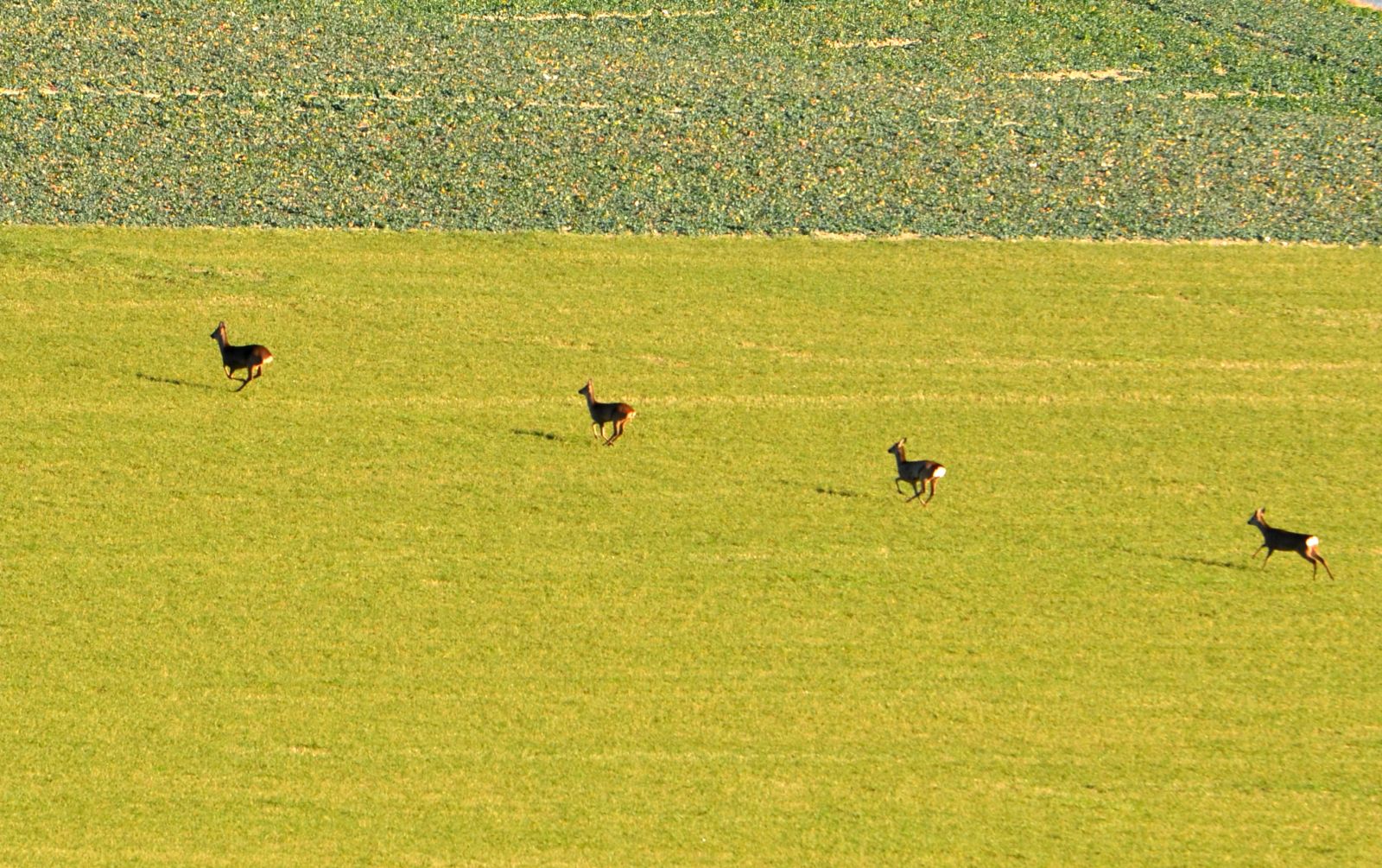
I gazed at the scenery through the foggy window and thought that it would not be easy to get within shooting range of the roes in this wide-open terrain. My fears proved to be very real. Plenty of roe deer in small family groups filled the fields but they constantly fled in panic several hundred meters in front of the vehicle.
My guide stopped the engine at the end of a never-ending hedge stretching hundreds of meters in front of us only to disappear behind a low hill. The enormous field was harvested but there were plenty of green weeds scattered in tuffs all over the place. 500 meters away two roebucks were staring at us. Behind them, there was a roe doe and two fawns browsing. There was absolutely no chance of getting in range of these animals but my experienced guide had another simple plan. Slowly and with the wind in our faces, we would walk along the hedge up the hill. With a little luck, we would surprise some deer on the other side of the hilltop at more reasonable distances.
Far out
We mowed cautiously forward. The bucks we had seen when we started our stalk intensely followed every step we took. We approached the hilltop. Suddenly Zbigniew froze and raised his binoculars. On the other side of the hill, numerous little groups of deer were browsing the field!
I moved behind him and followed him in a smooth silent gait towards the top. He often stopped to look at the animals for a long time before slowly moving on. On the top, he put his three-legged shooting sticks up and used them to steady his binoculars. The nearest group of deer was foraging quite a bit in front of us. It was a doe with two fawns and a young doe from last year.
The disappointment in my guide’s voice was clear. “They are too far away”, he said.
”How far?” I asked silently blaming myself for not having a rangefinder with me.
His reply fell withour hesitation in the tone of voice you would expect from a man who has laid eyes on tens of thousands of roe deer through the years. “250 meters!” I lifted the ASV+ turret on the riflescope and turned it to the clear line between the 200 and 300 meter markings.
Zbigniew saw my move and understood immediately. Without uttering a word, he took a long step to the side to allow me free access to the shooting sticks. I placed the forearm in the fork of the sticks, turned the magnification to 10X and cocked the rifle. Zbigniew was staring at the deer seemingly very keen not to miss the show that was about to unfold before his eyes.
Moment of truth
”The right one!” he said to let me know that we were trying to bag the young doe. Less than a second later, the blast of the muzzle rolled over the landscape. Within the time it takes to blink, we got the sound of the bullet impact in return. It sounded like a distant but heavy blow to a large drum. The deer was knocked to the ground. It got up, while the others took flight, but it fell over immediately and never got on its feet again.
A loud and spontaneous ”WOW!” was Zbigniew’s only comment. I turned towards him and was greeted by a wide smile. Roe deer was running wild all over the field and we both saw a single doe crossing the field behind us at full speed. Zbigniew quickly moved the sticks and said ”shoot if you get the chance!”. I had dialed the ASV+ turret back to 170 meters and thus I was ready for any distance between 150 and 200 meters.
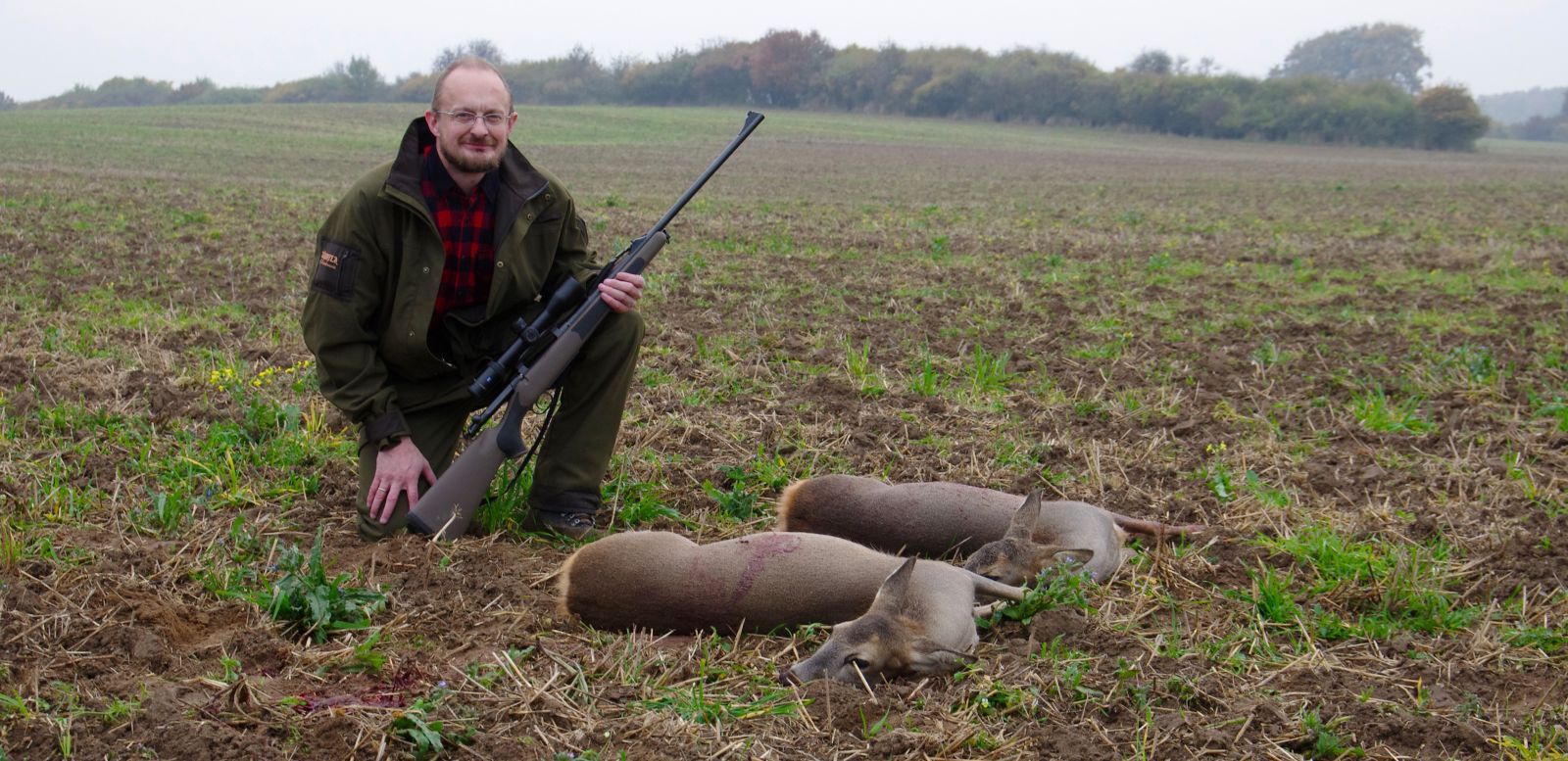
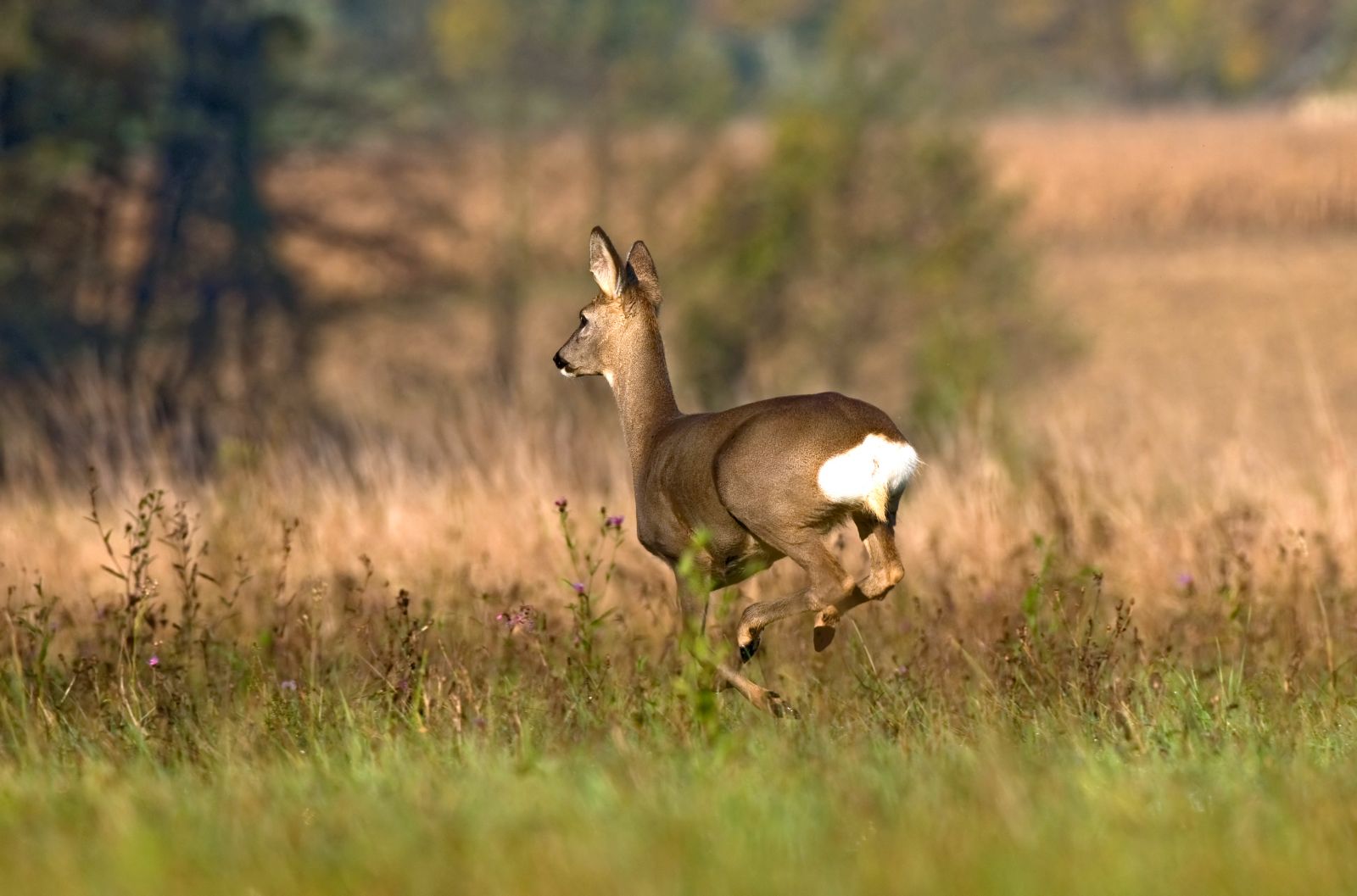
I followed the jumping roe through the scope. Just a few seconds before it reached the salvation of the hedge it made the fatal mistake that seems imbedded deeply in the genes of roe deer. It stopped to orientate. The firing pin fell instantly – and so did the deer. The distance was approximately 180 meters. I was more than satisfied. The first two shots at game with the new rifle had resulted in to fine roe does. They fell less than 20 seconds apart and yet at a distance between them of nearly half a kilometer.
The guide went to pick up the car while I went to wait by the nearest deer.
The last bite
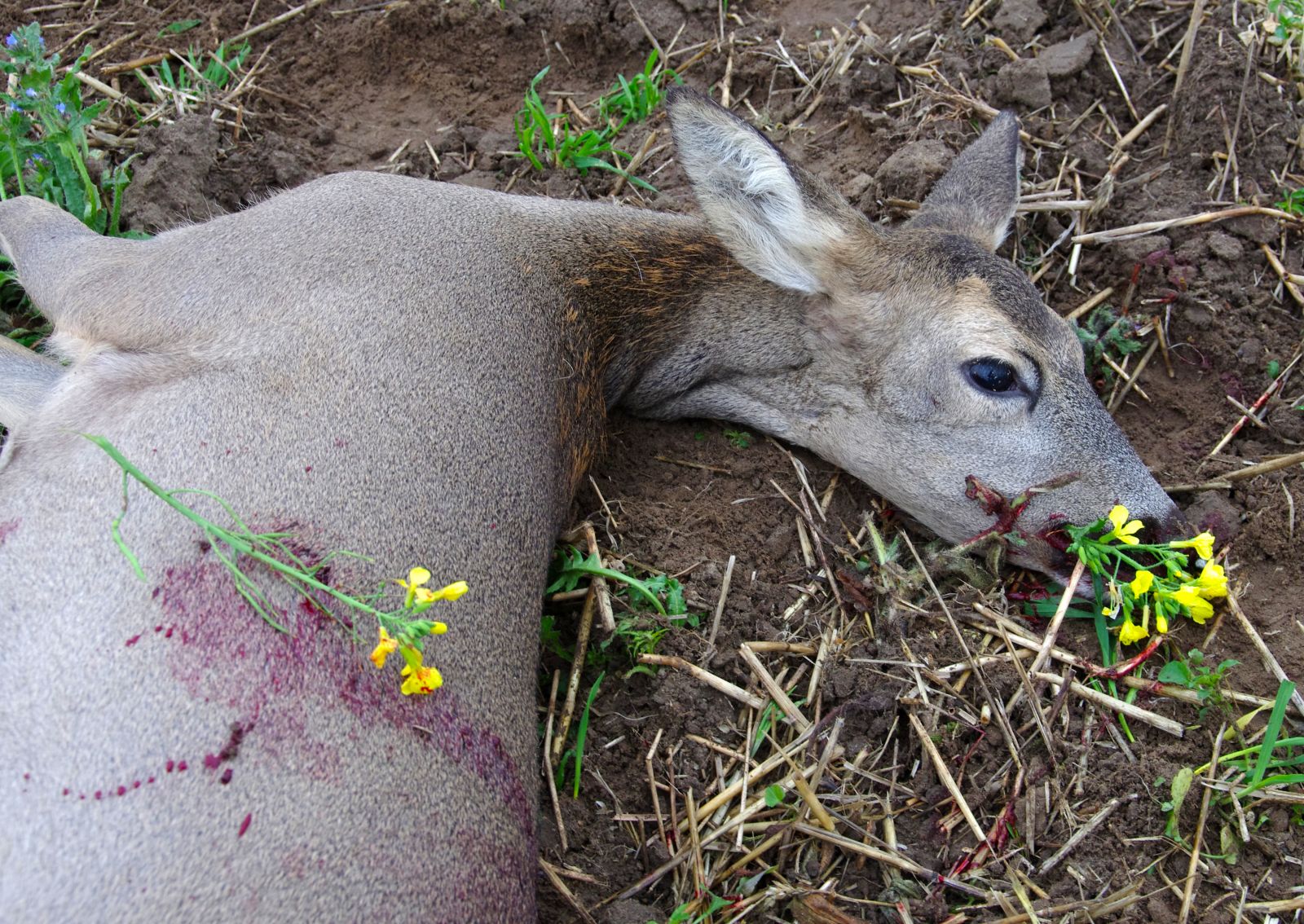
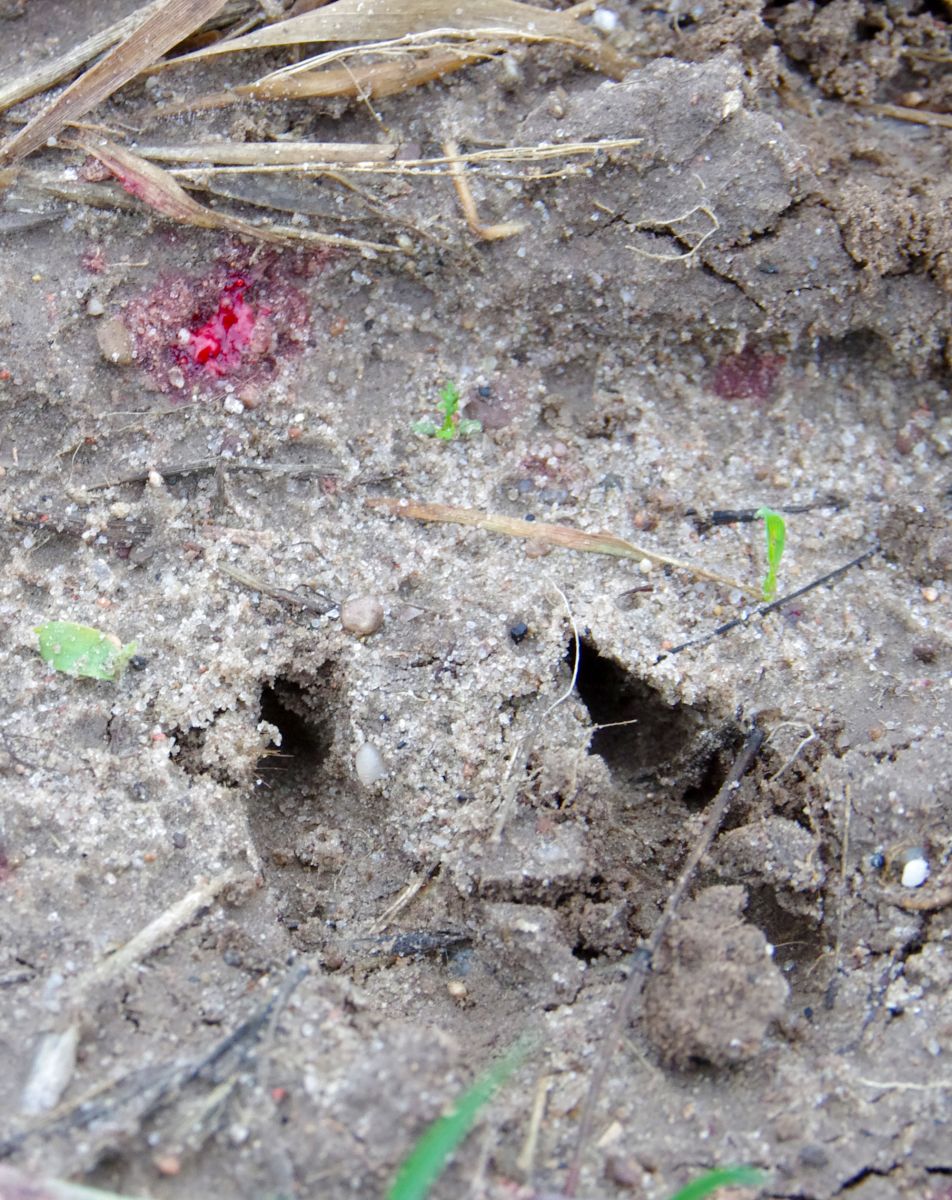
Zbigniew was there in a few minutes and he started the mandatory ceremony to honor the killed animal at once. He picked a bundle of short rapeseed twigs and placed most of them in the mouth of the roe as a last bite before its final journey to the eternal rapeseed fields. He gently dipped the remaining two twigs in the blood of the entrance wound, placed one on top of the bullet hole and presented me with the other carefully placed on his own hat. As I took it, he gave me a firm handshake and said “Darz Bór!” – an old Polish greeting between hunters. I replied using the same words and carefully placed the little twig with the heartblood of my quarry in my hat. It is a beautiful tradition and to Zbigniew there were no exceptions – all the game we killed was honored with the same heartfelt respect.
We arranged the two animals for a photograph and in a matter of a few minutes, they were gralloched and loaded on the back of the car.
During the following days I had the good fortune to bag another eight of these shy Polish roe deer. The average shooting distance was in the area of 175 meters while a few were shot at as much as 250 meters. In total, I now have 12 empty spaces in my first box of ammo for this rifle. I am fairly content with the statistics so far considering I used two shots on paper. I choose to believe that the thousands of shots I have fired on paper targets during the past few decades have somehow improved my luck.
Grand finale
When we ended the hunt after three short days, we arranged all the deer for a photo on the lawn in front of the hunting house. As a final ceremony, our guides played the horn signals for “roe deer” and “Darz Bór” over the dead animals. The trophies of this remarkable three-day adventure were plentiful. First and foremost there is the happy memories of the hunt and the nice trip in the company of a good friend. However, the nice photos and not least the fantastic roe deer venison that hibernates in my deep freezer are also great trophies indeed.
When I raise my glass at our dinner table to toast “Darz Bór!” in the months to come my thoughts will fly to enormous Polish fields filled with light-footed roe deer, salty guides and a rifle I could blindly trust…
Jagttur til Zmigrod oktober 2018
Vores tur startede fredag morgen med kurs mod Polen, hvor alle Havde meget store forventninger til nogle dage med jagt og afslapning for min kone og hunden. Som debutant i hjortejagt havde jeg specielt glædet mig. Efter en overnatning nåede vi reviret lørdag midt på dagen og efter frokost var der testskydning af riffel og derefter en aftenpursh. Derefter resterede 3 hele jagtdage med morgen jagt og aftenjagt. Disse dage blev uforglemmelige med spændende pursch en super jagtguide og godt selskab af tre gæve jyske jægere. Reviret levede op til alle beskrivelser og med en super service og gode værelser var de Polske værter medvirkende til at vi fik en god oplevelse ud af opholdet.
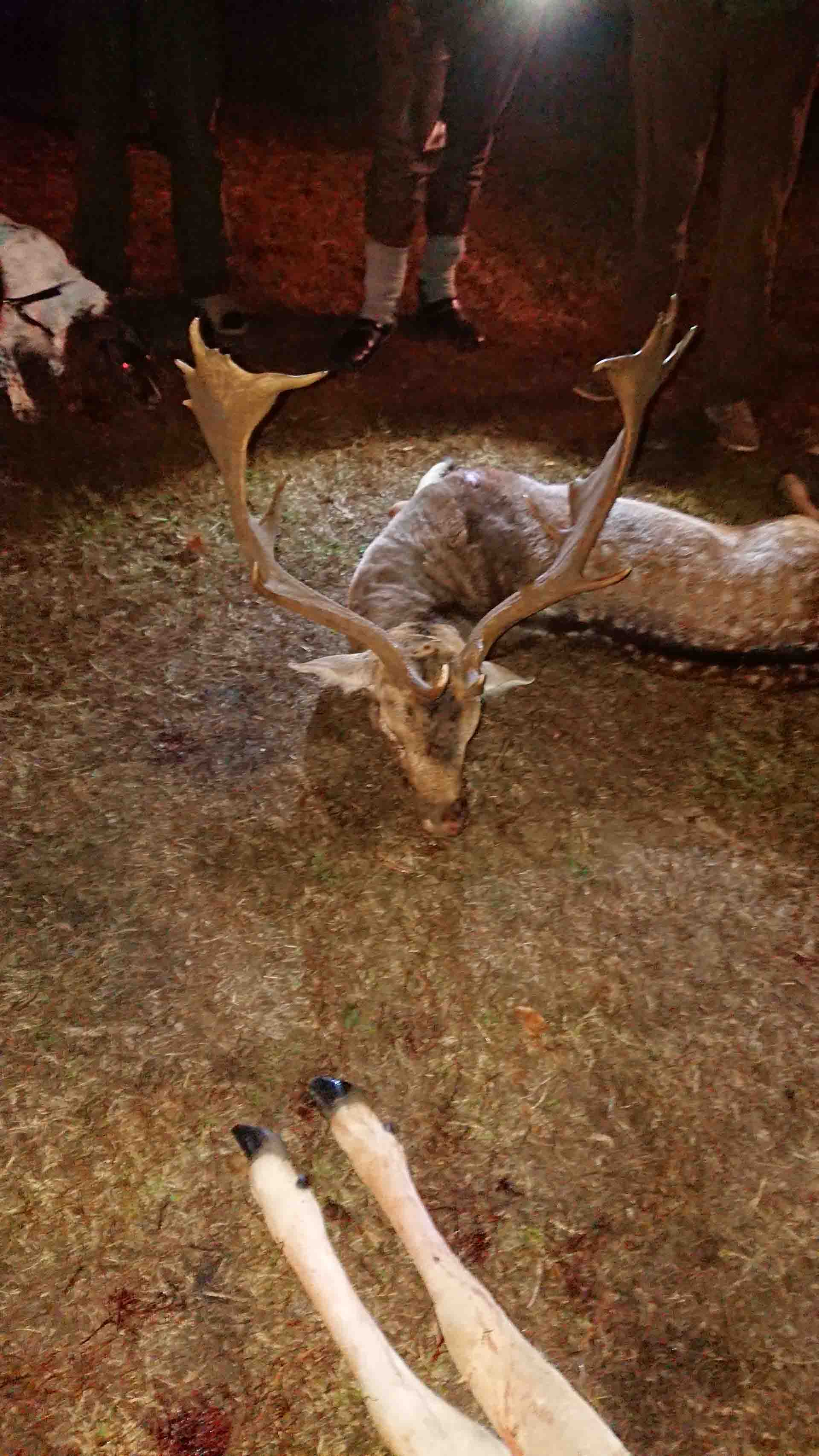
Udbyttet af jagtopholdet stod også mål med alle forventninger en meget stor dåhjort, en kronhjort og en hind. Jeg kan kun anbefale Zmigrod reviret, hvor vildtet var talrigt og hele oplevelsen både af jagt og revir gav en oplevelse for både mig som jæger og min kone som jagt interesseret medrejsende.
Tak til Diana Limpopo for en perfekt service og hurtige svar på amatørernes mange spørgsmål om rejse og ophold. Og tak til Søren, Nikolaj og Rasmus for godt selskab og hyggelige stunder.
Catrine og Hans Eriksen
Staffan in Milicz
It was well organised and run under the management of the forester and very professional guides. I had booked 10 outings and one stag. After 6 outings I had 19 observations and 3 shooting opportunities out of which I was able to stalk a bronze medal stag. As we stayed at the forester´s house I could enjoy the nice park and parade from my window. The stay was very comfortable with good service (including a good interpreter) and excellent company out of which a Geman hunter was returning for the 22nd time, which is as good a testimony as anybody can get!
Best regards
Staffan
Simon i Chojna
Michael Lassen i Wierzchlas
Game
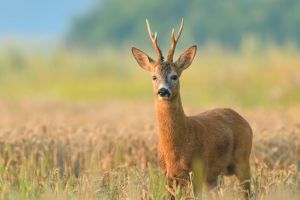
Buck/Roe Buck/Roe Deer (Europe)
Scientific Name: Capreolus capreolus Subspecies: We have not included any of the subspecies of Capreolus capreolus, as the authors dissagree about their status as individual subspecies. Distribution: All of Europe except Ireland, Iceland, Southern Spain and Greece. Roe Deer populations are not common to the Mediterranean islands. Habitat: Roe Deer populations are found today in most terrain...
Read more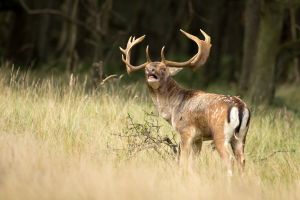
Fallow Deer (Europe)
Scientific Name: Cervus dama Subspecies: Mesopotamian Fallow Deer (C. d. mesopotamica) Distribution: The Fallow Deer originated from Asia Minor, but is found all over Europe today, either freely roaming or in fenced in areas. Habitat: Woodland with dense undergrowth often in the immediate vicinity of pasture land. The Fallow Deer prefers open land. Description: Large deer weighing...
Read more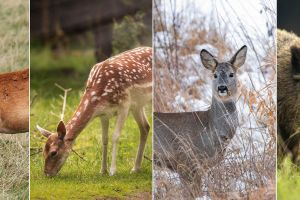
Female Deer
Female Deer consist of several game species: Red Deer, Fallow Deer, Roe Deer and Wild Boar. Red Deer Hind Scientific Name: Cervus elaphus Distribution: The native range of the red deer Europe, parts of north Africa and western Asia, it has been introduced to Australia, New Zealand, Chile and Argentina. Habitat: In most of their range they are forest animals, but in some areas, such as...
Read more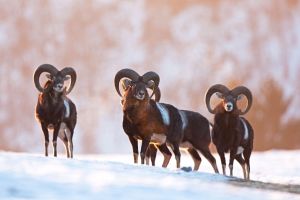
Mouflon (Europe)
Scientific Name: Ovis musimon Subspecies: None in Europe. Distribution: Small isolated groups all over Europe (mostly in fenced in areas). Habitat: Prefers undulating forested areas. Description: Middle sized animal of the sheep family weighing up to 60 kg. (rams), and measuring around 80 cm over the shoulder. General colour dark brown on the back and along the flanks. A black band is...
Read more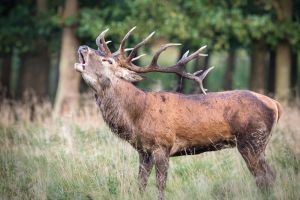
Red Deer/Red Stag (Europe)
Scientific Name: Cervus elaphus Subspecies: We recognise the following subspecies for Europe: East European Red Deer (C.e. montanus) Corsican Red Deer (C.e. corsicanus) Distribution: Red Deer is found in most European countries. Habitat: Woodland, pasture land, wetlands and moorland. Is found in lowlands as well as on high ground and in mountains. Description: Large deer weighing...
Read more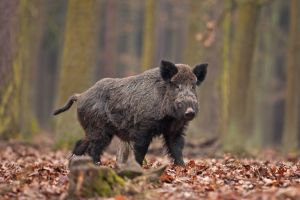
Wild Boar (Europe)
Scientific Name: Sus scrofa Subspecies: Sus sr. castilianus (Portugal and Spain) Sus sr. reiseri (Albania, Bulgaria and the former Yugoslavia). Sus sr. attila (Hungary, Romania and Russia). Distribution: All countries in Europe with the exception of The British Isles, southern Italy and southern Greece. Habitat: Woodland with dense undergrowth, often in the vicinity of pasture...
Read moreSpecial conditions for Poland
Single room supplement
Unless agreed otherwise all accommodation is in double- or 3/4-bedded rooms. A supplement for
single room will be charges for, if:
• you travel alone
• a group has an uneven number of persons
• you are given a single room in the accommodation – REGARDLESS of the reason
• you sleep alone in a room with more beds
• you book a single room
Transport during the hunt
For most hunting districts a fixed price for transport during the hunt has been agreed. The price is
per hunter, regardless if you are provided with an “individual” vehicle or not. The price vary from
Euro 50-80 per hunter per day.
The hunt
In Poland all hunting is on 1:1 basis – so that each hunter has his own hunting guide. The Polish
hunting guide is responsible for choosing the game to be shot, but it is always the guest hunter
who – after having been given permission to shoot – decides if he/she wants to shoot or not. The
hunting
guide always does his best to comply with the wishes of the hunter, but it is always the person
behind the rifle who takes the final decision.
Extra days hunting
If you wish to extend your stay by one or more days, this should be arranged with your interpreter
or us during your stay. In some cases an extension may not be possible.
Interruption of hunting
If, for any reason, you leave the hunting district early, there will NOT be any reimbursement to
clients for any planned activities that have been booked but not carried out.
Extra meals
A lengthened stay including a single meal will be charged at EURO 25,-. A lengthened stay that
includes 2 meals will be charged at the rate for a full extra day´s accommodation.
Dogs
If you bring your own dog you will be charges a sum of Euro 10,- per day, which will normally be
payable directly to the hunting district. Please be aware that not all hunting districts will accept
clients bringing their own dogs. To enter Poland a dog must have a valid dog passport and be able
to be identified with a readable ear tattoo or microchip.
Interpreter
An interpreter is obligatory for all hunting districts. Please inform us in advance whether you would
prefer an English og German speaking interpreter. In some districts the interpreter = hunt
manager or hunting guide
Agreements
Agreements between DIANA´s clients and staff/forester in the districts will not be accepted under
any circumstances. Any hunting guest is responsible for his signed protocol – regardless of
“private” agreements – verbal or written.
Trophy deposit
When you confirm your booking of one of our hunts, we will request a trophy fee deposit. On your
return home this amount will be adjusted to reflect the actual results of your hunt. The deposits
are as follows:
Red stag: Euro 1,350,-
Roebuck: Euro 300,- (per roebuck)
Fallow buck: Euro 1,000,-
Wild boar Euro 300,-
Mouflon Euro 1,350,-
Driven/small driven hunts Euro 410,-
Doe-Hind Hunt Euro 300,-
Game shot out of season:
The Polish authorities have introduced a system of charges for game shot during the close season.
The charges are as follows:
Red deer: 5,800,- zloty
+ 2,000,- zloty for trophies up to 5,5 kg
+ 7,000,- zloty for trophies over 5,5 kg
Fallow deer: 2,300,- zloty
+ 1,500,- zloty for trophies up to 2.6 kg
+ 3,000,- zloty for trophies over 2.6 kg
Sika deer: 5,500,- zloty
+ 1,000,- zloty for trophies up to 2.0 kg
+ 2,500,- zloty for trophies over 2.0 kg
Roe deer: 2,000,- zloty
+ 1,000,- zloty for trophies up to 430 g
+ 5,000,- zloty for trophies over 430 g
Mouflon: 1,800 zloty
Wild boar: 2,300 zloty
Other species: 1,000,- zloty
Game shot within the hunting season but without permission of the hunting leader has to be paid
according to the trophy price list + a punishment of 100%.
Protocols
We advise all hunters to oversee the weighing and measurement of trophies before signing the
hunting protocol – regardless of which package you bought.
If a hunter wishes to bring home the whole head of a game animal, its weight will be set in the
hunting district. The cost will then be calculated from that weight. We therefore CANNOT
recognize any claims arising from this.
This also applies to the measurement of wild boar tusks. If a hunter wishes to bring home the
whole head, the tusks will be measured with the visible part being assumed to make up to 1/3 of
the total length.
Trophies are normally weighed and measured 24 hours after boiling. If a hunter leaves the district
earlier than 24 hours after the trophy was boiled, it will be the wet weight that will be entered on
the
protocol and it will not be possible afterwards to claim any refund on the price charged –
regardless of circumstance.
If you, for any reason, have cause to lodge a complaint or request a refund, this HAS TO be done
in the protocol or it will not be possible for us to handle you case after you return home. Please
note that when you sign the protocol you confirm that everything stated within it is
100% correct.
Settling of your final account
The settling of your final account will take place after we have received the hunting protocol from
Poland, which can take 4-6 weeks, regardless if monies will be refunded or an extra charge made.
An extra invoice has to be paid within 10 days, also if you by any reason have decided to
leave the trophy and/or skins etc. in the district for later pick up or posting. Please be
aware that sick
or previously wounded game shot by the guest hunter and entered into the protocol has to be paid
according to the usual price list.
Alcohol
It has been determined by law that all hunts are to be reported to the police not later than 7 days
before the beginning of the hunt – stating the exact dates for the hunt and the address of the
accommodation. This means that unannounced inspections can occur. They want to check if all
personal papers are okay and also if the hunters are hunting with alcohol in the blood. The blood
alcohol level for driving in Poland is 0.0% and the same goes for carrying the rifle.
Choice of calibre
Polish regulations state the following ROE DEER: From 100m the bullet must have energy on
impact of 1,000 joules. OTHER GAME: From 100m the bullet must have energy on impact of 2,000
joules.
Driven-/small driven hunts
Please be aware that it is only allowed to use telescopic sights of max. x3 magnification for driven
and small-driven hunting. Variable sights that can be adjusted down to x3 magnification and below
are allowed. That is to say that, for example a 2.5 – 10x magnification is allowed. Sights with a
fixed magnification of more than x3 are not allowed. According to the polish law each hunter HAS
to wear min. 2 elements in fluorescent colours – it means yellow or orange.
Gratuities
It is normal to give a small tip to your hunting guide, to the translator and the kitchen. How much
you give is up to your own discretion.
Full Moon Calender 2025/26
13th January
12th February
14th March
13th April
12th May
11th June
10th July
09th August
07th September
07th October
05th November
05th December
03rd January
01st February
03rd March
Hunting season 2025/26
Roebuck 10.05.-30.09.
Roe deer does/lambs 01.10.-15.01.
Red stag 20.08.-28.02.
Red deer hind 30.08.-15.01.
Red deer calf 30.08.-28.02.
Fallow stag 30.08.-28.02.
Fallow deer does 30.08.-15.01.
Fallow deer kids 30.08.-28.02.
Wild boars Whole year
Driven-/small driven hunts 01.10.-15.01.
Mouflon rams 01.10.-28.02.
Mouflon ewes/lambs 01.10.-15.01.
Fox 31.05.-31.03.
Racoon dog Whole year
Badger 30.08.-30.11.
Wild ducks 15.08.-21.12.
Wild geese, West Poland 01.09.-31.01.
Hunting Area
Barlinek
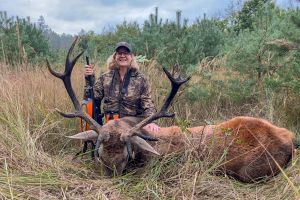
The Barlinek state hunting district in north west Poland covers a total area of 6,166 ha. of which 5,426 is forest, while the remaining 740 ha. is meadow. The forest is made up of 67% coniferous tree, 14% beech, 195 oak, 3% birch while the remainder is mixed broadleaf. The district is generally flat. Barlinek has 71 high seats/stands and 14 feeding places. It is possible to hunt from a horse...
Read more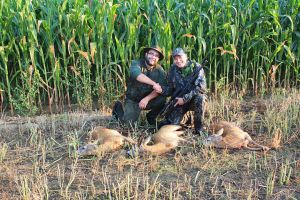
Brodnica
The Brodnica state hunting district in northern Poland covers a total area of 9,690 ha. of which 2,613 is woodland, while the remaining 7,077 ha. consists of farmland, meadows, lakes, rivers and streams. The woodland is largely Scots pine (70%), but there is also oak (10%), beech (10%), birch (5%) and alder (5%) - a nice mixture of many different species. The district is generally...
Read more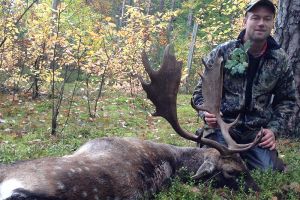
Chojna
The Chojna state hunting district in north west Poland covers a total area of 13,820 ha. of which 9,354 ha is forest, while the remaining 4,466 ha consists of farmland. meadows and lakes. The forest is mainly coniferous (76%), but 5% consists of beech, 9% oak and the rest mixed broadleaf woodland. The district is mainly flat, but some parts of the district are slightly hilly. Chojna has 40...
Read more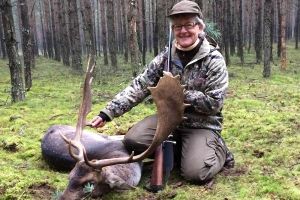
Dabrowa
The Dąbrowa state hunting district in north west Poland covers a total area of 11,344 ha. of which 9,857 ha. is forest while the remaining 1,487 ha. consists of farmland, meadow, wetlands and small watercourses. In the midst of the district is a lake of some 19 ha. where it is possible to fish. The forest predominantly consists of conifers (83.6%), but there are also oaks (5.8%), birch (4.4%),...
Read more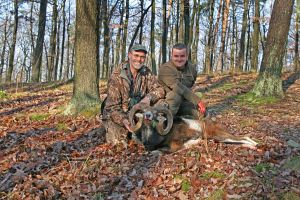
Jawor
The Jawor state hunting district covers a total of 10,229 ha. of which 5,994 ha. is forest, while the remaining 4,235 ha. consists of farmland and meadow. The forest is made up of 55% oak and 30% conifer, but there are also areas of birch, beech, alder and aspen. The district is partly flat and partly hilly (up to 600m above sea level). Jawor has 121 high seats/stands and 29 feeding places....
Read more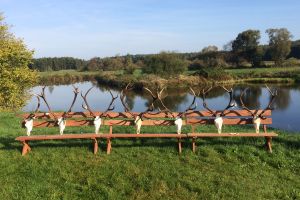
Kliniska
The Kliniska state hunting covers a total of 16,589 ha. of which 12,611ha. are forest and the remaining 3,978 ha. is farmland and meadow. The forest is largely coniferous (86%). The district is generally flat. Kliniska offers more than 85 high seats and stands together with 32 feeding places. Individual hunts can be arranged for up to 6 hunters at a time, however the optimal number is 3 - 4...
Read more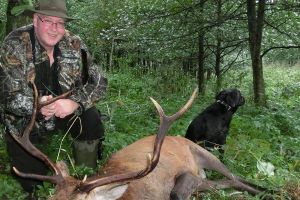
Ladek Zdroj
The Ladek Zdroj state hunting district lies in the Sudety mountains in the south western corner of Poland, close to the border with Czech Republic. The district covers a total of 11,428 ha. of which 9,323 ha. are forest, while the remaining 2,105 ha. consists of farmland and meadow. The forest is predominately coniferous. The Sudety are gentle, forest clad mountains, largely covered with tall fir...
Read more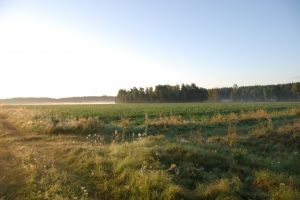
Legnica
The Legnica state hunting district is 8,986 ha in size, of this 5,571 ha. is forest while the remaining 3,415 hectares is made up of farmland, meadows and lakes. The forest predominantly consists of conifers (69%) and oak (19%), but there are also areas of beech and birch. Most of the district is flat, although in places it is gently hilly. Legnica has 77 high seats/stands and 8 feeding places....
Read more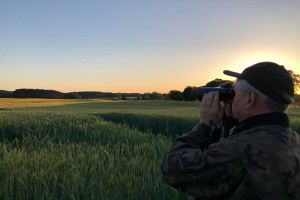
Lutowko
The Lutowko state hunting is 18,000 ha. in size, of which 9,000 ha. is forest, and the remaining 9,000 ha. is mainly farmland, with some meadow, lakes and wetland. The forest is largely coniferous (60%), but there are also area of oak, birch and other broad leafed trees. The district is largely flat. Lutowko has 35 high seats/stands together with 22 feeding places. It is also possible to carry...
Read more
Miedzyrzecz
The state district of MIEDZYRZECZ is located in western Poland close to the Polish/German border.
Read more
Milicz
The state owned districts Milicz 45 and 67 lie in south west Poland, just to the north east of Wroclaw. Malice 45 is 6,319 ha. in size, of which 2,032 ha. are forest and the remaining 4,287 ha. are farmland, meadow and lakes. The forest is largely coniferous (85%) or alder (6%). The district is generally flat. Malice 45 offers 79 high steats/stands and 17 feeding places....
Read more
Rozanna
The Rozanna state hunting district in north west Poland is 9,113 ha.in size, of which 5,488 is forest, while the remaining 3,625 ha is mainly farmland. There are also a number of large lakes, the largest of which (25km2) forms the district northern and eastern borders. The forest is largely coniferous (circa. 70%), the rest being made up of broadleaf trees such as birch, beech, alder and aspen....
Read more
Runowo
The Runowo state hunting district in north west Poland covers a total area of 5,000 ha., of which 2,700 is forest, while the remaining 2,300 ha is farmland, meadow, lakes and wetlands. The forest is 40% coniferous, 35% oak, 15% birch and 10% other broadleaf trees. The district is predominantly flat. Runowo has 23 high seats/stands and 11 feeding places. The district can take up to 3 hunters at a...
Read more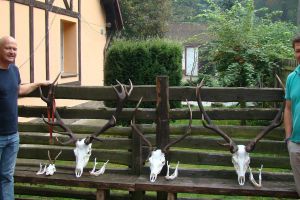
Rzepin
The state owned district Rzepin is 8.317 ha in size, of which 4.970 ha is forest, while the remaining 3.347 ha is farmland and meadow. The forest is largely coniferous. The terrain is largely flat. Rzepin has 144 high seats/stands. Up to 3-4 hunters can be accommodated here on individual hunts. Th district offers roe dee, red deer and wild boar, as well as a very small population of...
Read more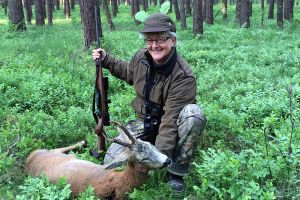
Wierzchlas
The Wierzchlas state hunting district is11,773 ha.in size, of which 7,068 ha. is forest and the remaining 4,705 ha. consists of farmland, meadow and wetlands. The forest consists predominantly of conifers, with scattered areas of oak and birch. The district is mainly flat, although some parts are gently hilly. There are numerous lakes and ponds, both large and small. Wierzchlas has more...
Read more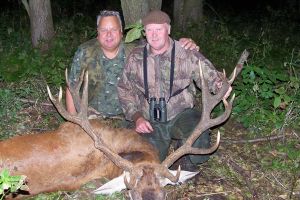
Zamrzenica
The Zamrzenica state hunting district is 17,274 ha. in size, of which 9,700 ha. is forest and the remaining 7,574 ha. farmland, meadow, lakes and wetlands. The forest is predominantly coniferous (circa 80%), but there are also areas of oak, birch and other broadleaf trees. The district is generally flat, but some areas are slightly hilly. Zamrzenica has over 125 high seats/stands and 50 feeding...
Read more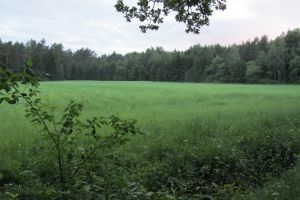
Zlotoryja
The Zlotoryja state hunting district is 7,856 ha. in size, of which 3,790 is forest and the remaining 4,066 hectares is farmland and meadow. the forest largely consists of conifers (72%) and birch (10%). The district is generally flat. Zlotoryja has 105 high seats/stands together with 10 feeding places. Here it is also possible to conduct an exciting hunt from a horse drawn wagon, on condition...
Read more
Zmigrod
The Zmigrod is our longest standing state hunting distric,t with whom we have been working in partnership with since 1978. It covers a total area of 27,284 ha., of which 11,202 ha. is forest, while the remaining 16,082 ha. consists of farmland, meadow, lakes and wetlands. The forest is made up of 64% coniferous trees, 14% oak and 14% alder. The district is predominantly flat. Zmigrod can offer...
Read more