James on Buck Hunting in France
Who says France is only for lovers? It’s for hunters too!
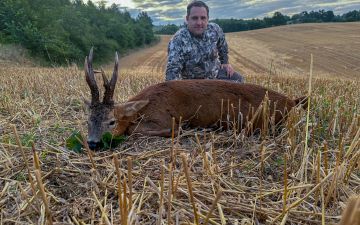
One of the advantages of hunting in Europe is the exposure to history. I got my first taste of European hunting, served with a touch of history, when I was stationed in Germany with the U.S. Army in the early 1970s. I discovered that I enjoyed it, and ever since I have regularly found myself roaming around the continent. The best times for roebuck hunting are in spring or early summer, from April to the beginning of June, and again during the rut in late July and early August.
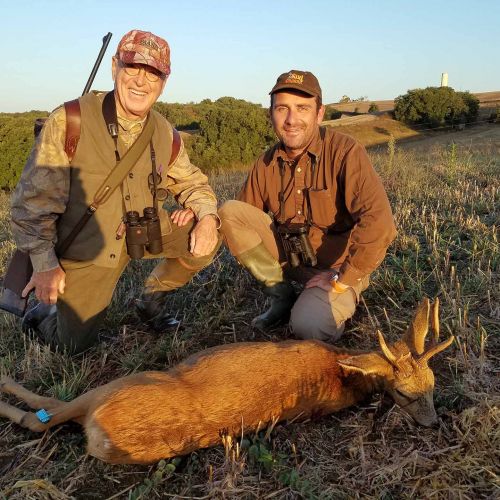
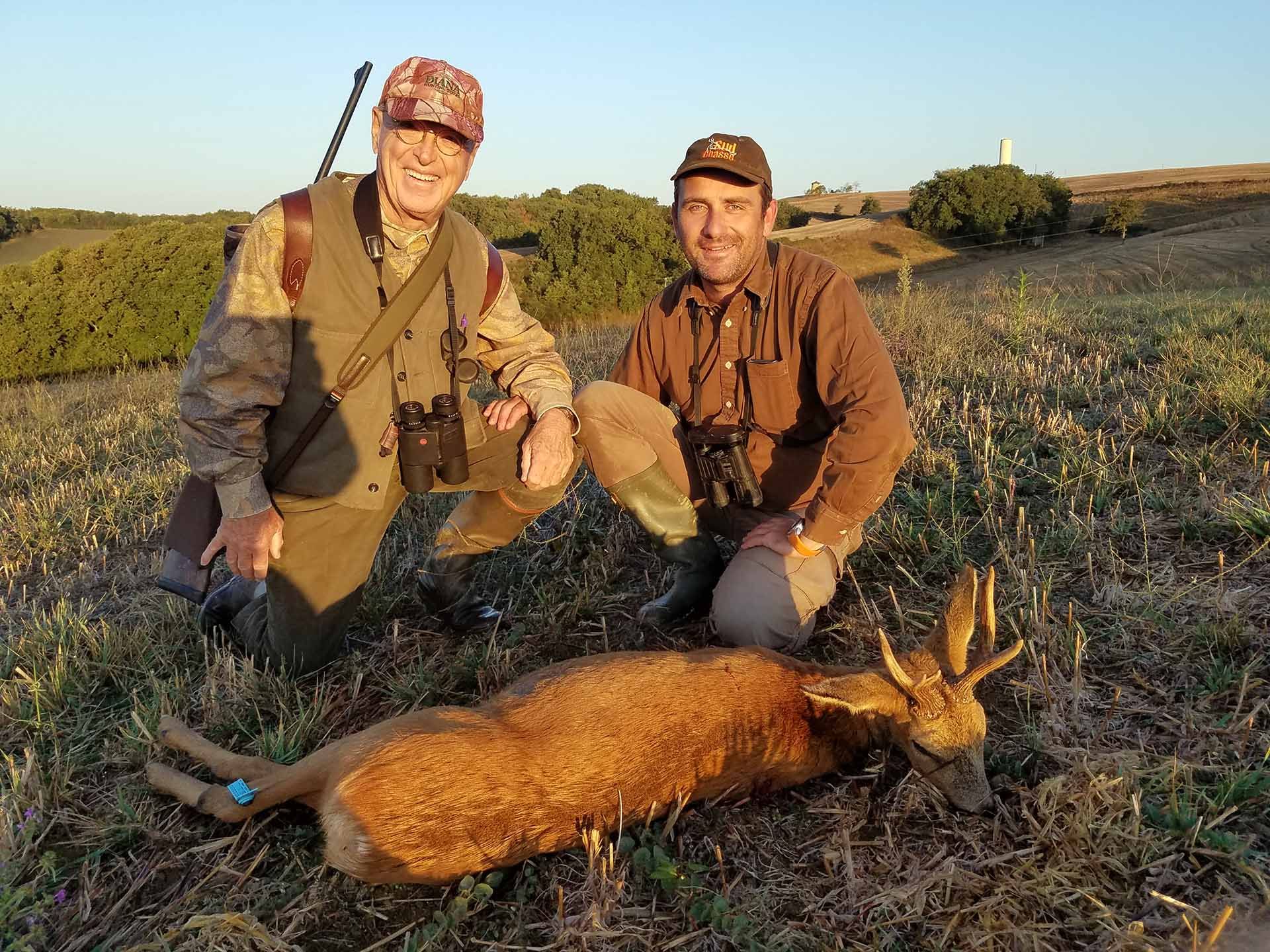
My most recent trips have taken me to France. The first was in October, while the second was in June. Before arriving, all I really knew about French hunting was the traditional par force hunting of deer and the French passion for wild boar hunting. After all, this area was once Gaul before it became France – the land known from Asterix and Obelix! A couple of years ago, I responded to an advertisement from Diana Hunting Tours, which led to a three-day roebuck hunt near the provincial town of Auch, followed by a few days deep in the Pyrenees hunting red stag. Two years later, I returned for roebuck, hoping to take a wild boar as well.
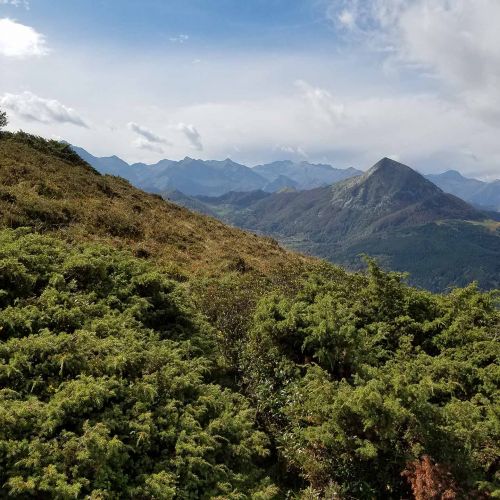
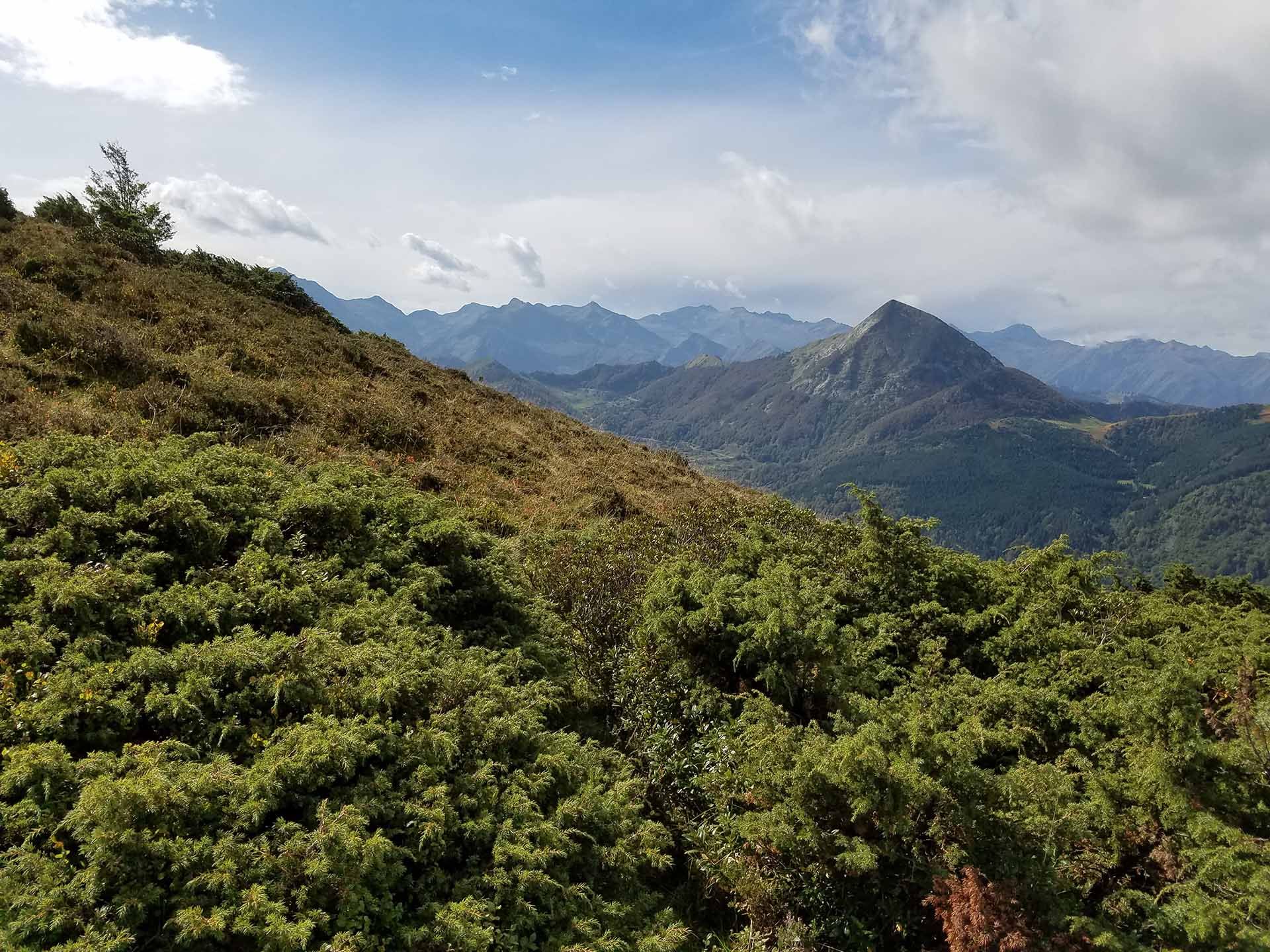
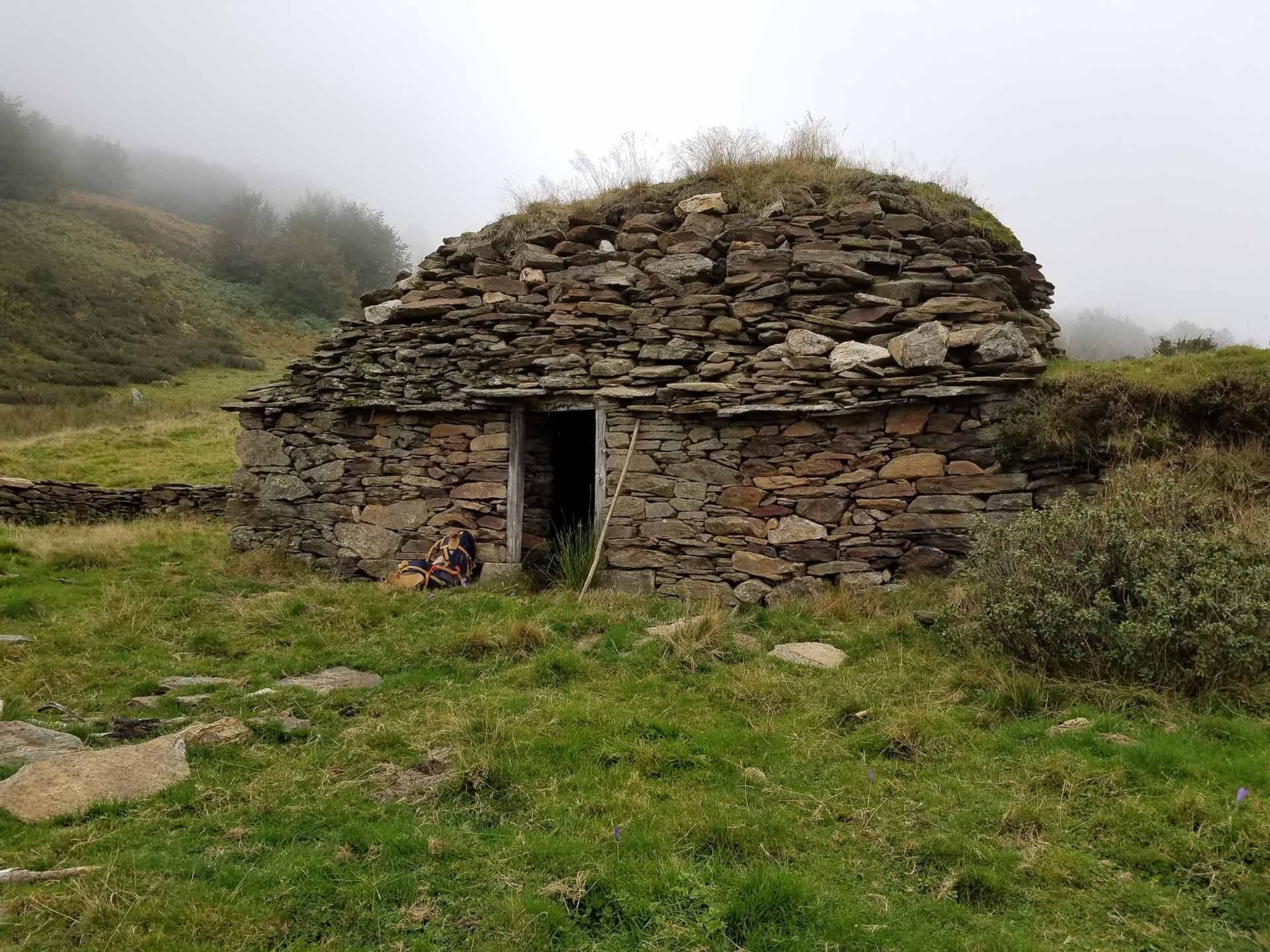
In France, I got more history than I could possibly digest, along with some of the most memorable hunting experiences of my life. Southern France, often with the Pyrenees as a backdrop, is steeped in history. The historical mix of this area includes the Basques, the regions of Béarn, the Basque Country and Aquitaine – both before and after the Roman conquest – as well as the Kingdom of Navarre and Gascony. Add a couple of famous kings associated with Pau, the good King Henry IV of France and King Charles XIV John of Sweden, born Jean Bernadotte, and you have a historical “soup” almost too thick to eat. As a final topping, you can add the Mann family saga, as they fled the Nazis by crossing the Pyrenees. You now have a soup for all seasons.
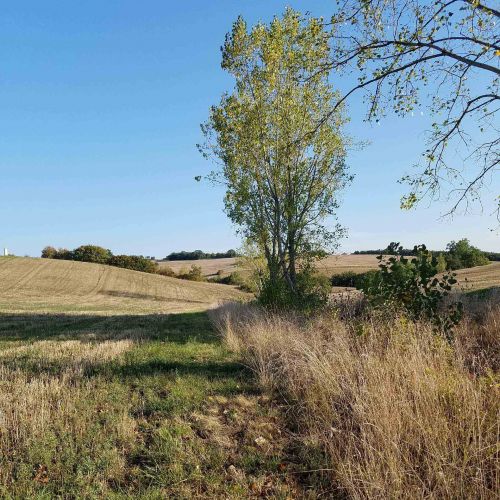
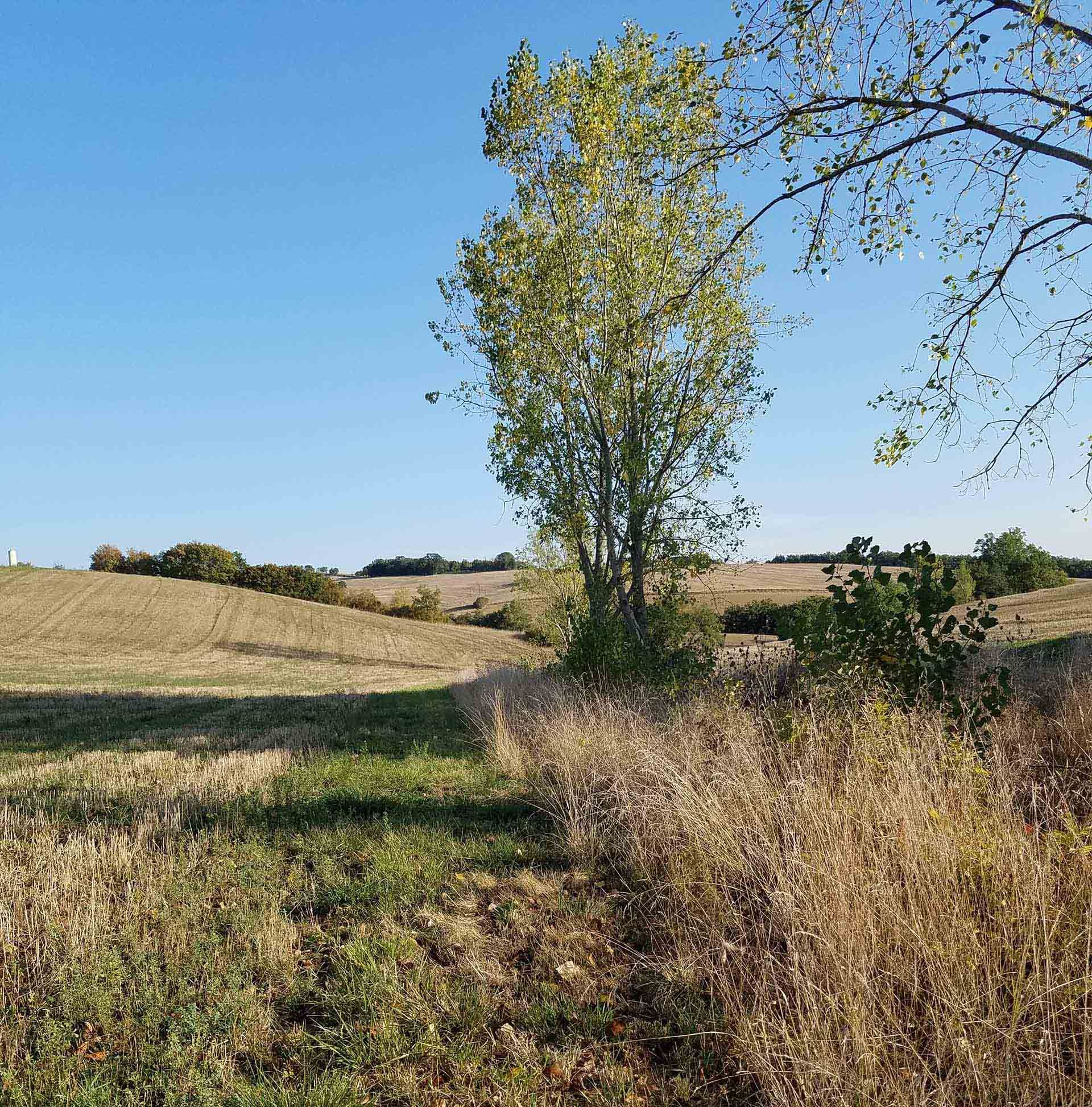
On my first trip, I landed in Toulouse, home of Airbus, to hunt roebuck in the rolling farmland near Auch. It was after the grain harvest and therefore not a typical time for roebuck hunting, but the population was strong and the hunt was successful. On my second trip, I stayed near Pau, the city associated with the two kings. My guide picked me up in the morning, after which we drove a short distance through the Poudenx area to my hotel. Once again, I enjoyed great French hospitality, a clean and comfortable place to stay and excellent food.
That evening I went out stalking with Frederic, the hunting manager. We made a brief stop to fire a test shot. It landed around 10 cm too high, but I thought that was acceptable considering I had used the bonnet of the Suzuki as a rifle rest. However, when the moment came, I missed the first buck. Too high. Back to the shooting range. This time I fired two shots. They were 15 cm too high. I adjusted the scope a couple of times, and then it was spot on. Fortunately, there were no further problems.
This area had much more vegetation than the countryside around Auch. There were oak forests, small meadows and fields – perfect roe deer habitat. We saw plenty of animals, although far more does than bucks. One evening, we even spotted a group of wild boar at the edge of the forest. I shot a large animal, but unfortunately it turned out to be a sow without tusks. Luck was not with me. Sometimes fortune favours the animal, and sometimes the hunter. Until then, I had thought luck was on my side, but apparently not.
Work commitments meant Frederic had to return to his shop, and the guide Lucas took over as hunting manager. The previous day, he had seen a large buck and wanted to take me out to see if we could find it. We stalked for more than a kilometre, perhaps two, constantly uphill through the forest. Eventually, we reached a series of small meadows and small maize fields. The maize was around 30 cm high. We moved extremely carefully. In the tall meadow grass, Lucas spotted the ears of a roe deer. A doe. She saw us, but could not catch our scent and eventually settled back down. No buck appeared.
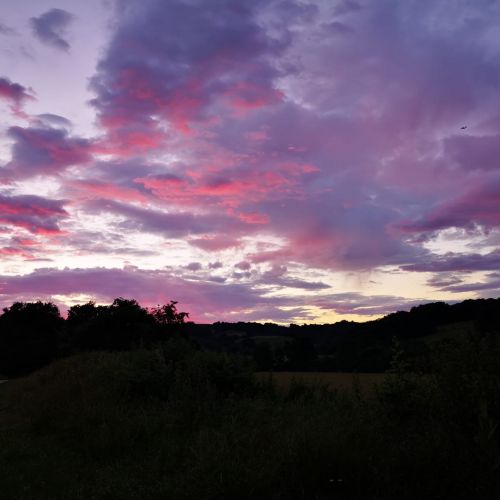
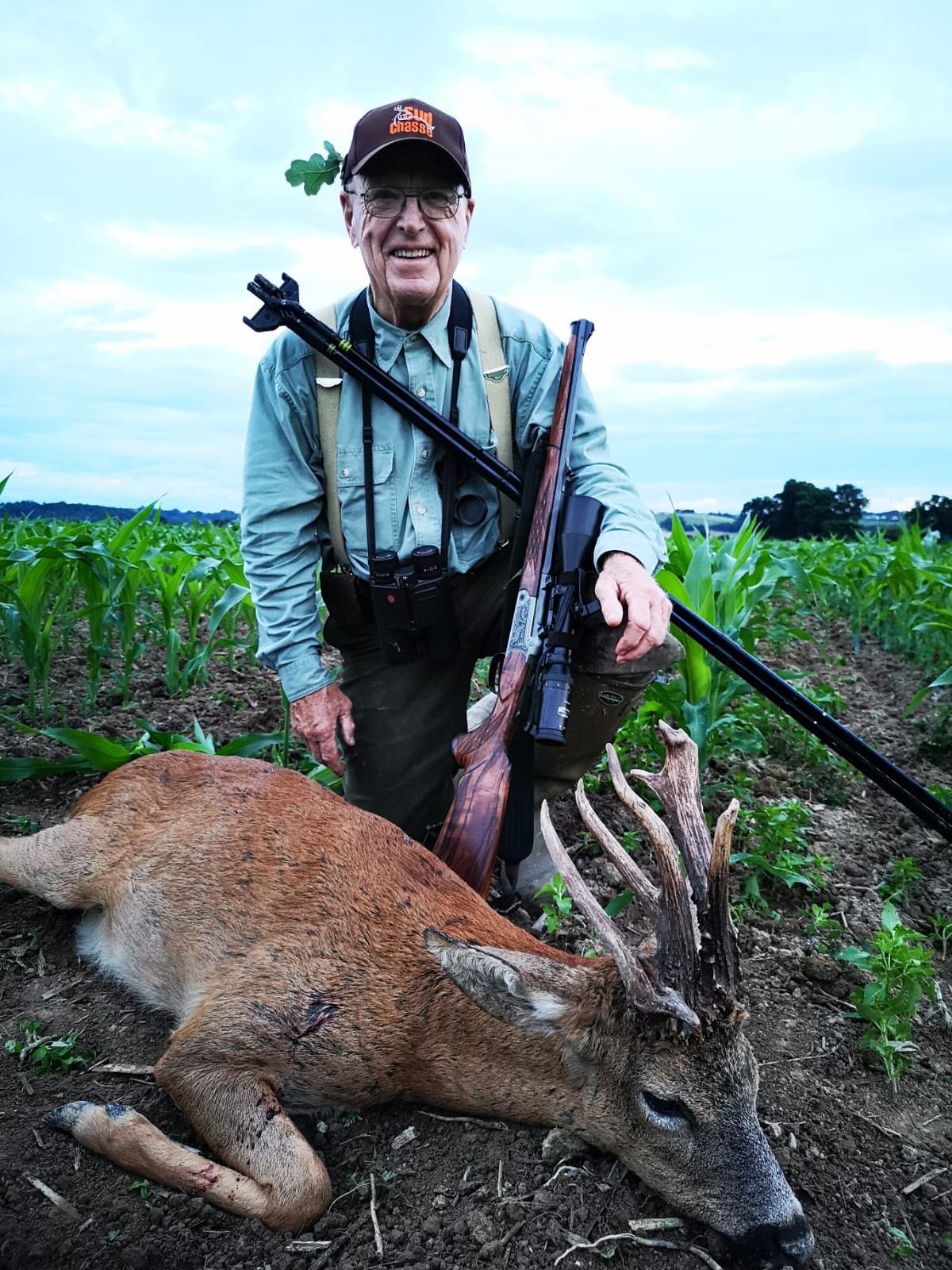
At the edge of the grain field, the forest projected out into the field almost like a peninsula. This became our “stand”, looking east. The sun had just gone down. The first time Lucas scanned the maize field with his binoculars, he suddenly became very excited and quickly set up the shooting sticks. In the meantime, I had also spotted the buck. The animal was standing between the rows of maize. I could not see its body, but there was plenty of antler visible above the crop.
I rested the rifle on the shooting sticks and said to Lucas, “OK. Get him up.”
Lucas called out. Nothing happened. He called again, louder this time. The buck’s ears moved. Lucas now called very loudly, and finally there was movement. From experience, I knew that no matter how athletic, graceful and quick a roe deer may be, it does not leap instantly to its feet from sleep. First the animal came up on its front legs, then stood upright and stretched.
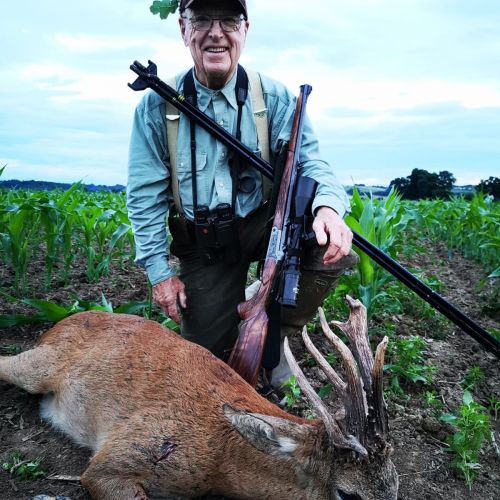
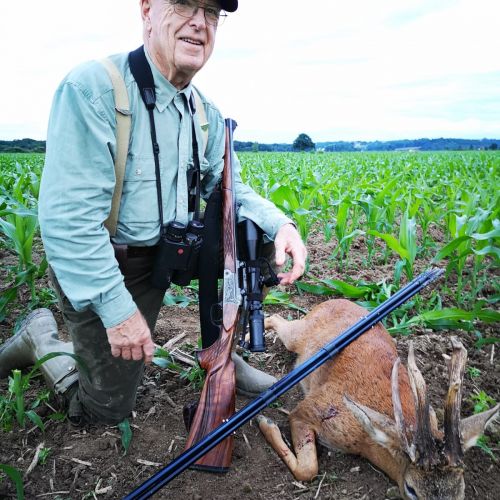
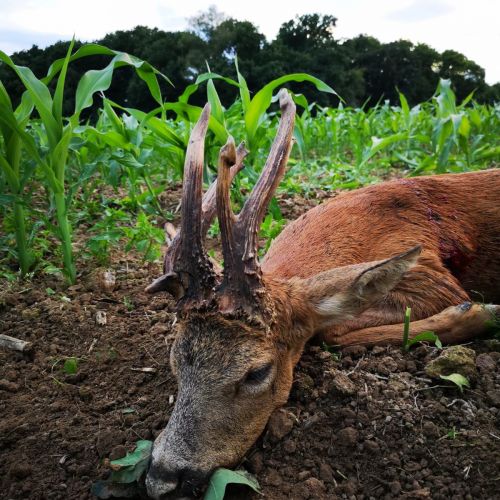
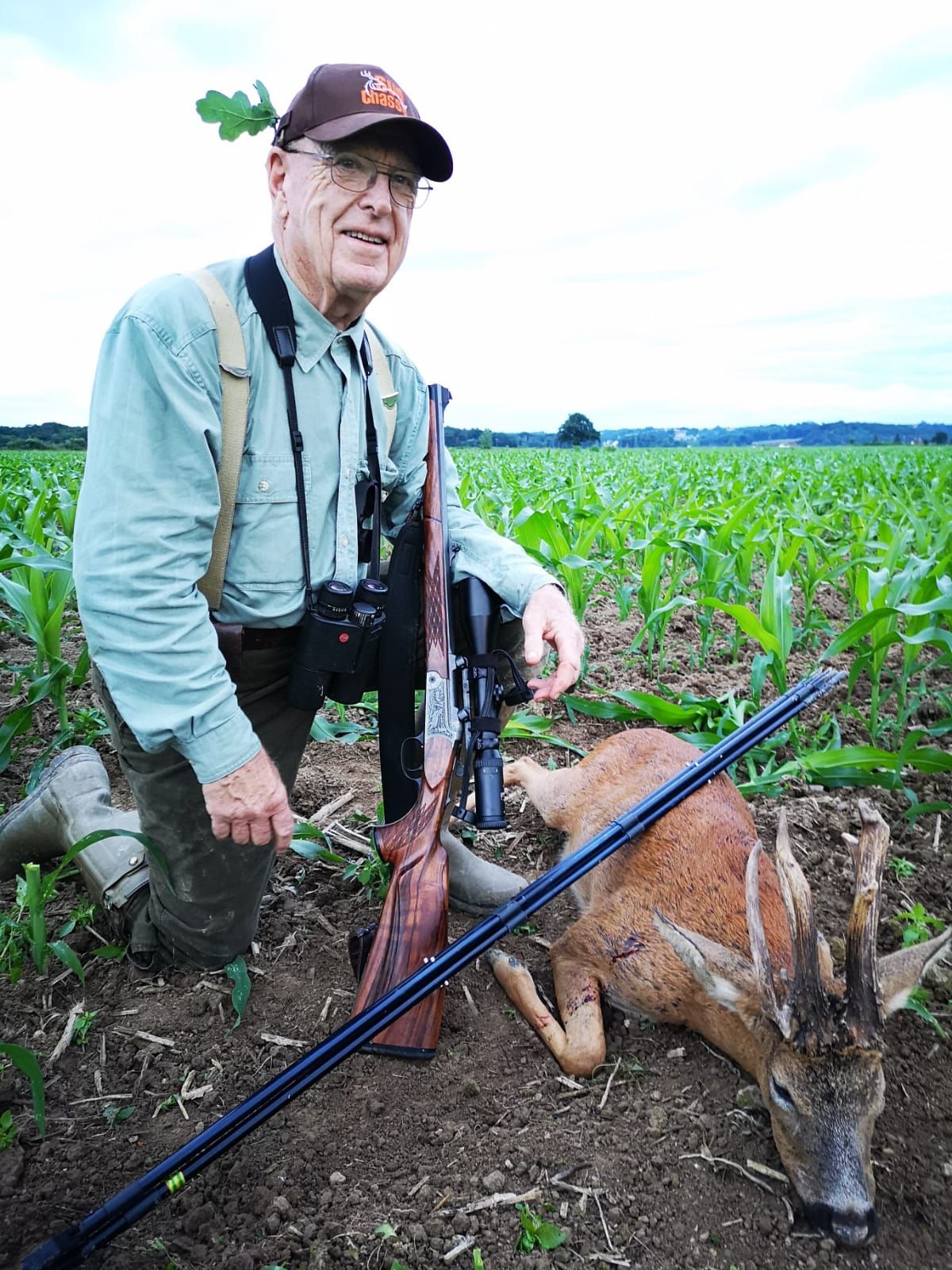
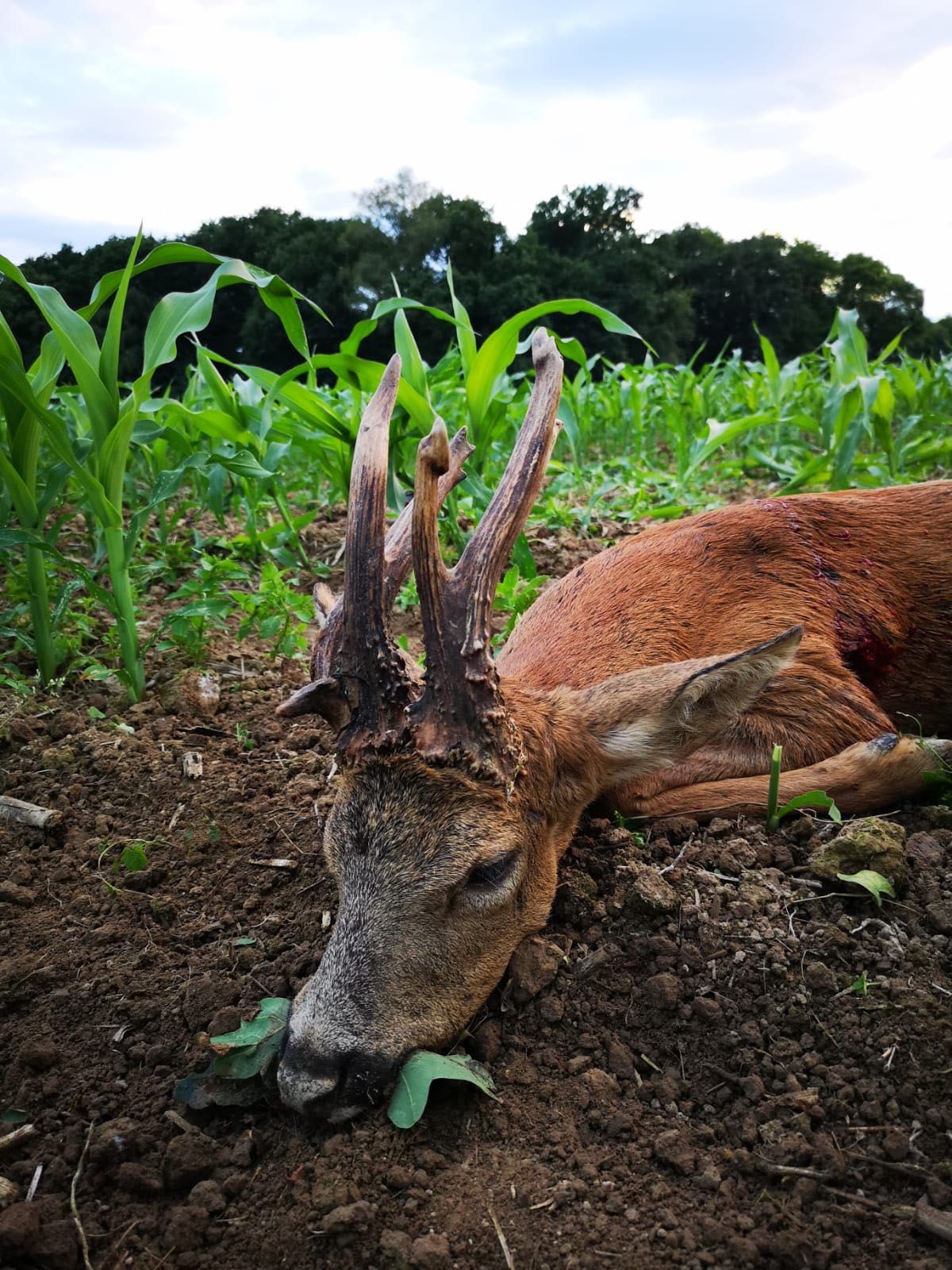
This time, Lady Luck was on my side. The buck stood up. The shot was well placed, and the animal went down.
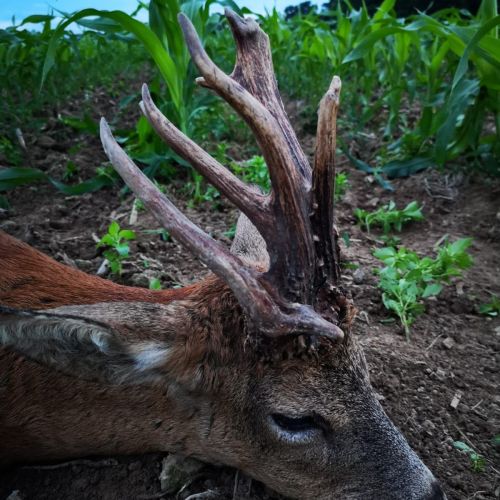
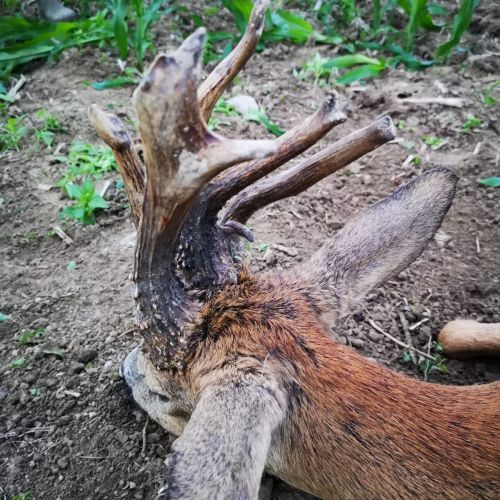
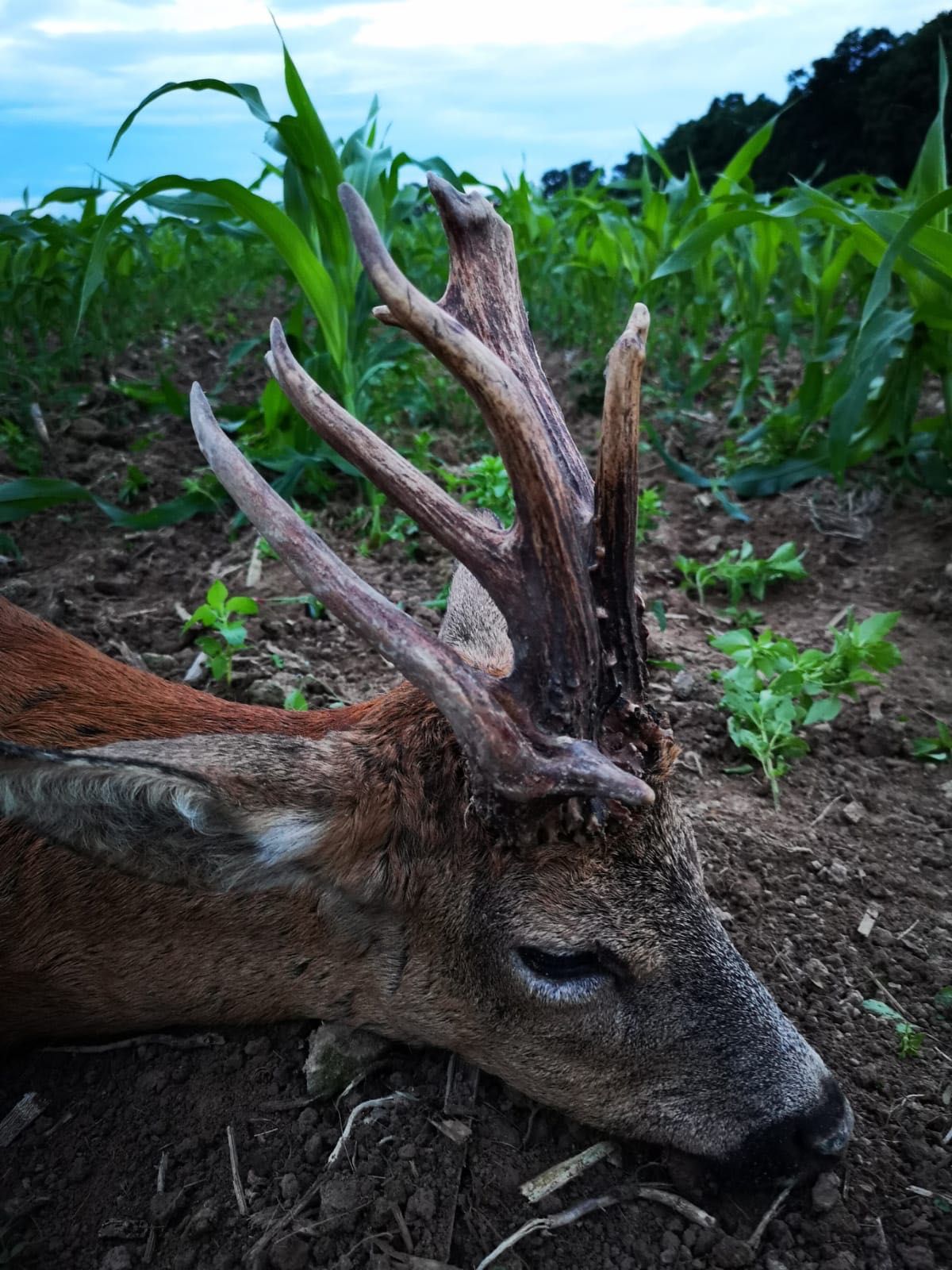
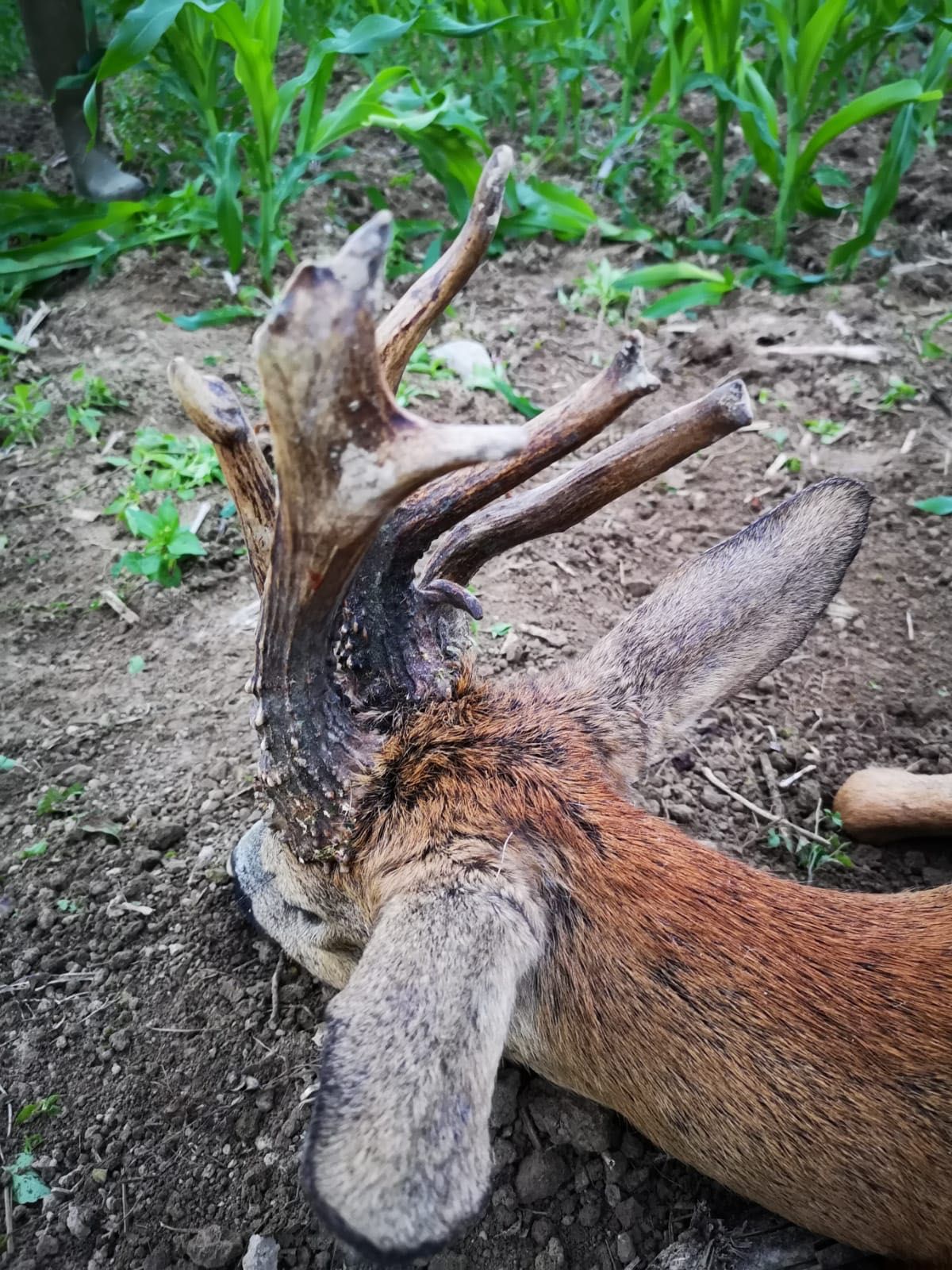
In 48 years of roebuck hunting, the buck lying in front of me was the best I had ever seen – let alone shot. An old buck with massive, thick and atypical tines. A dream buck that comes along only once in a lifetime!
– James Lowell Males